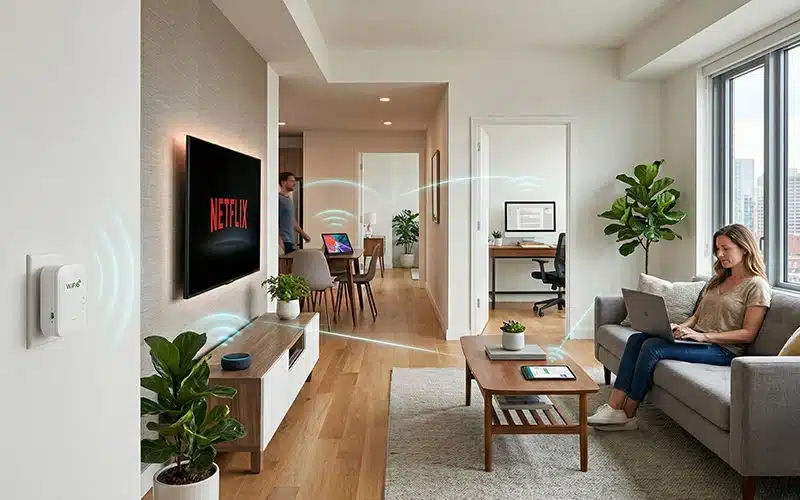
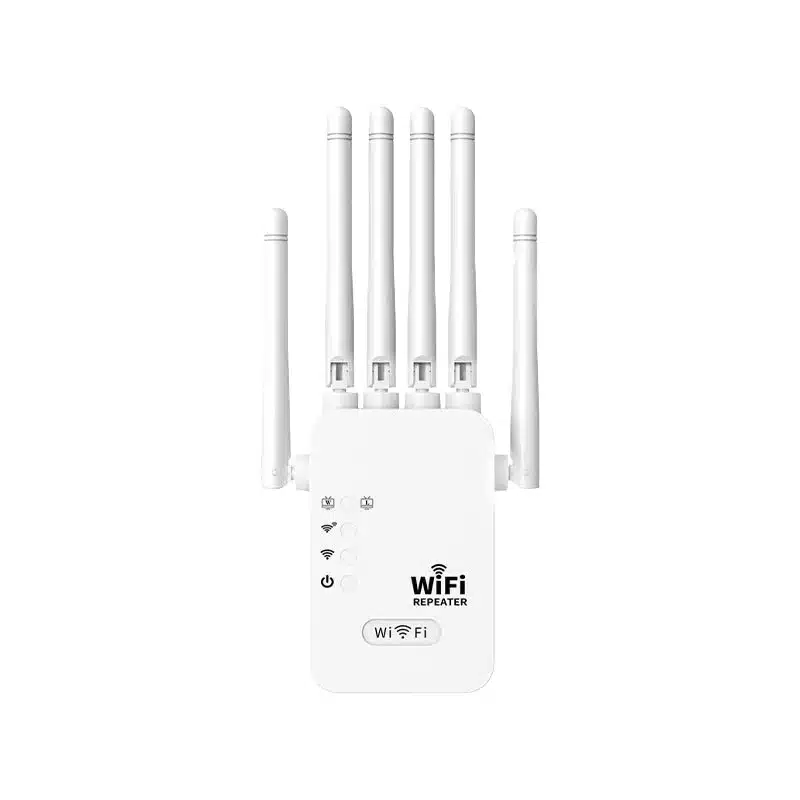
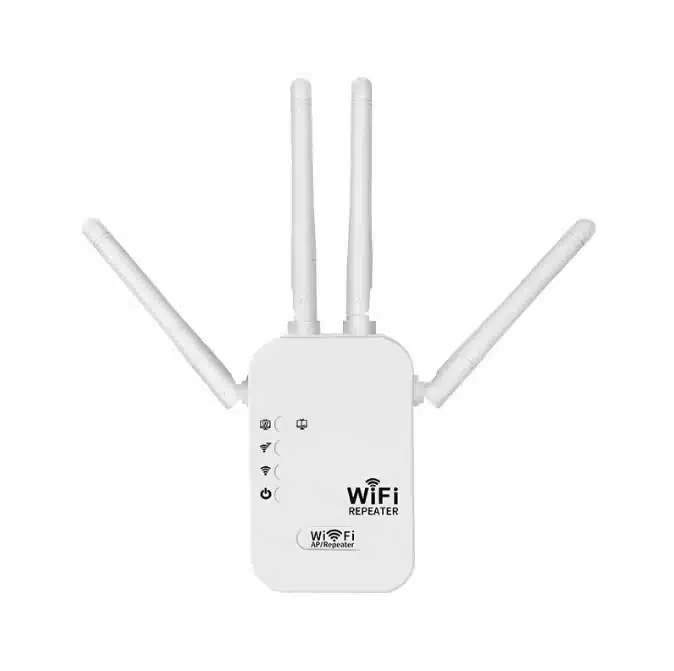
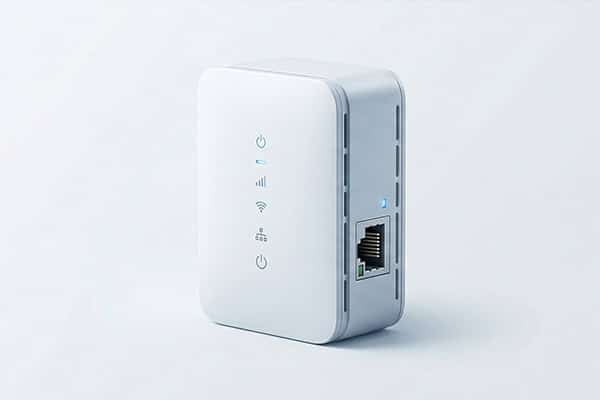
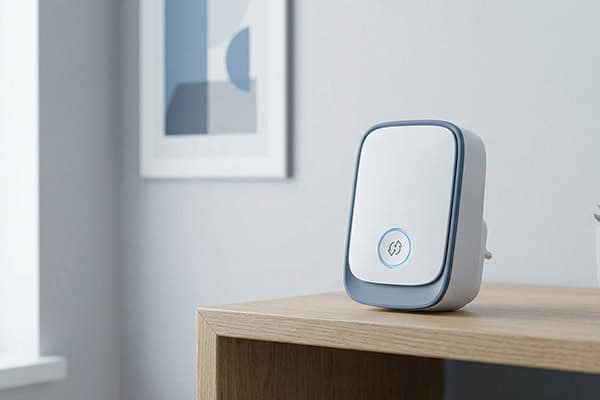
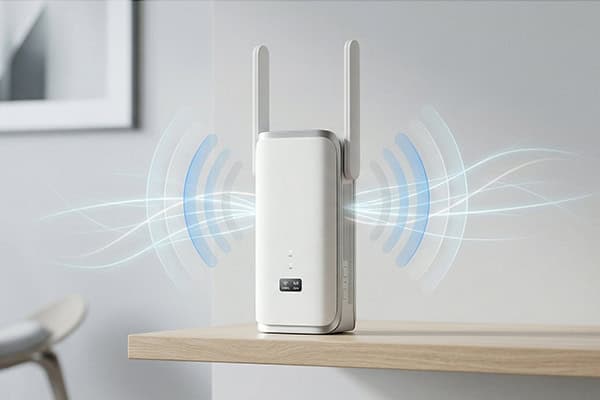
Built for indoor dead zones, multi-room signal extension, and simple residential deployment. Explore home repeater options by wireless standard, hardware format, and OEM customization path.
Best for indoor coverage extension—not long-range outdoor bridging
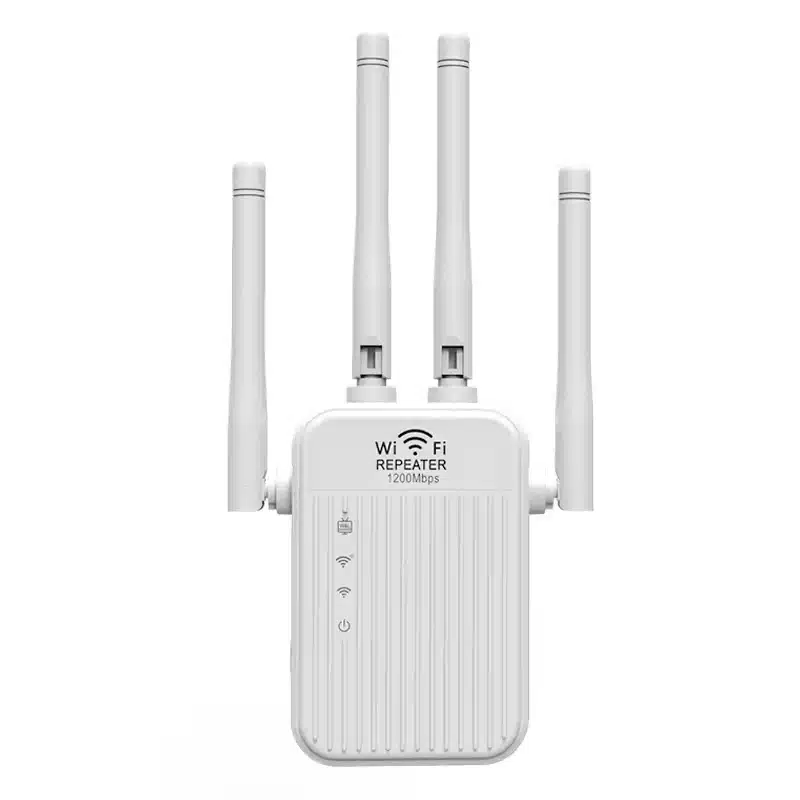
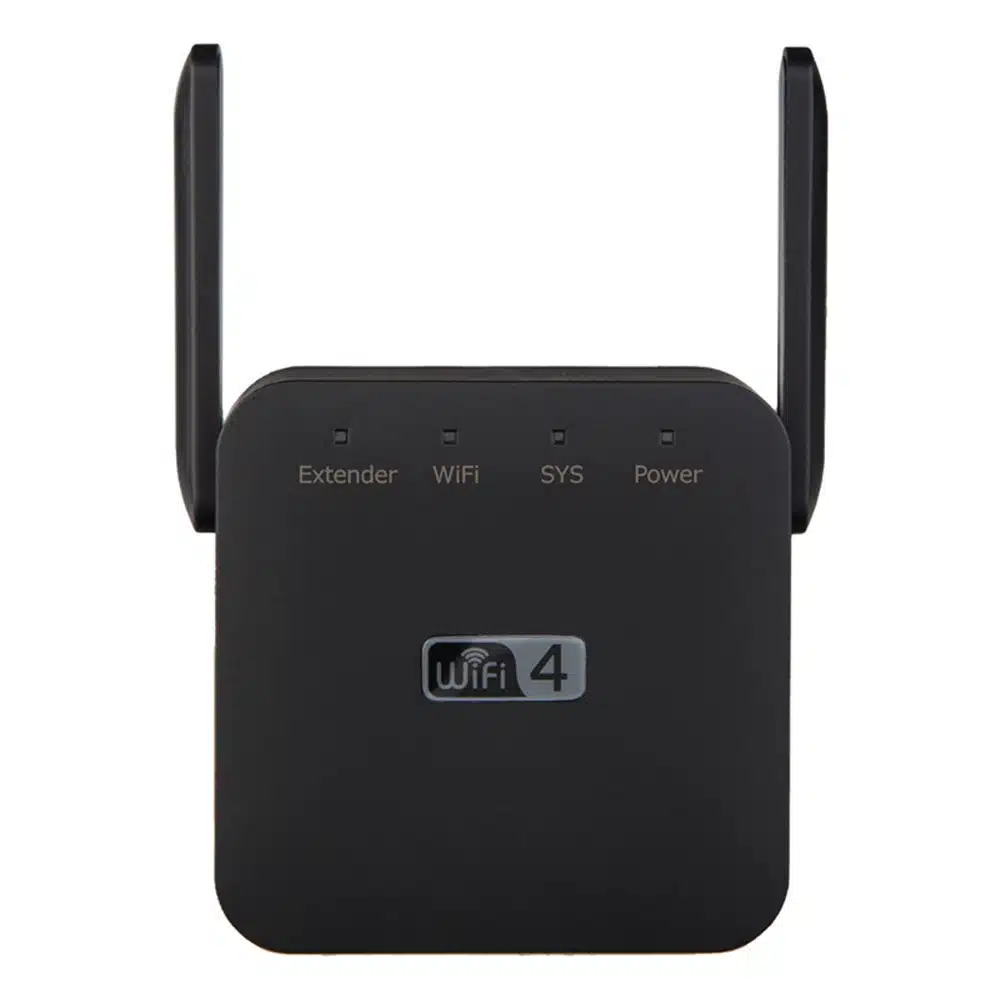
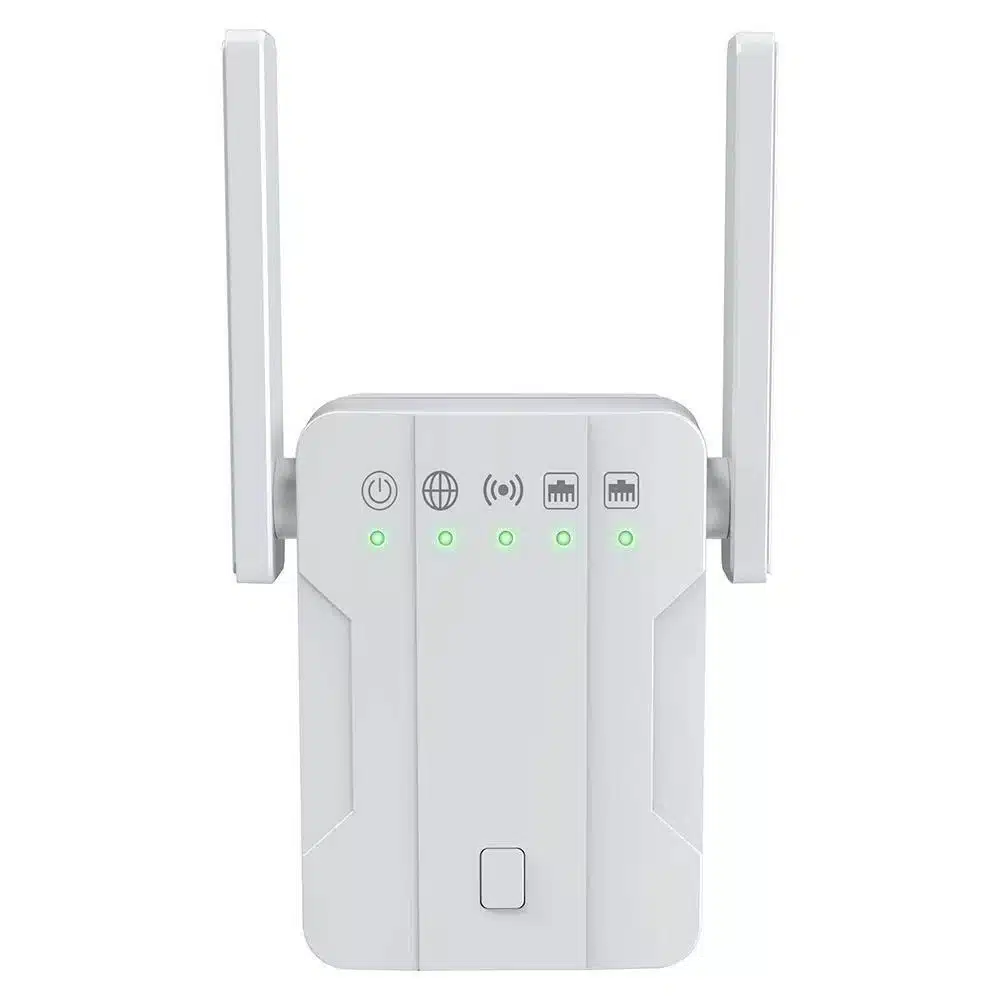
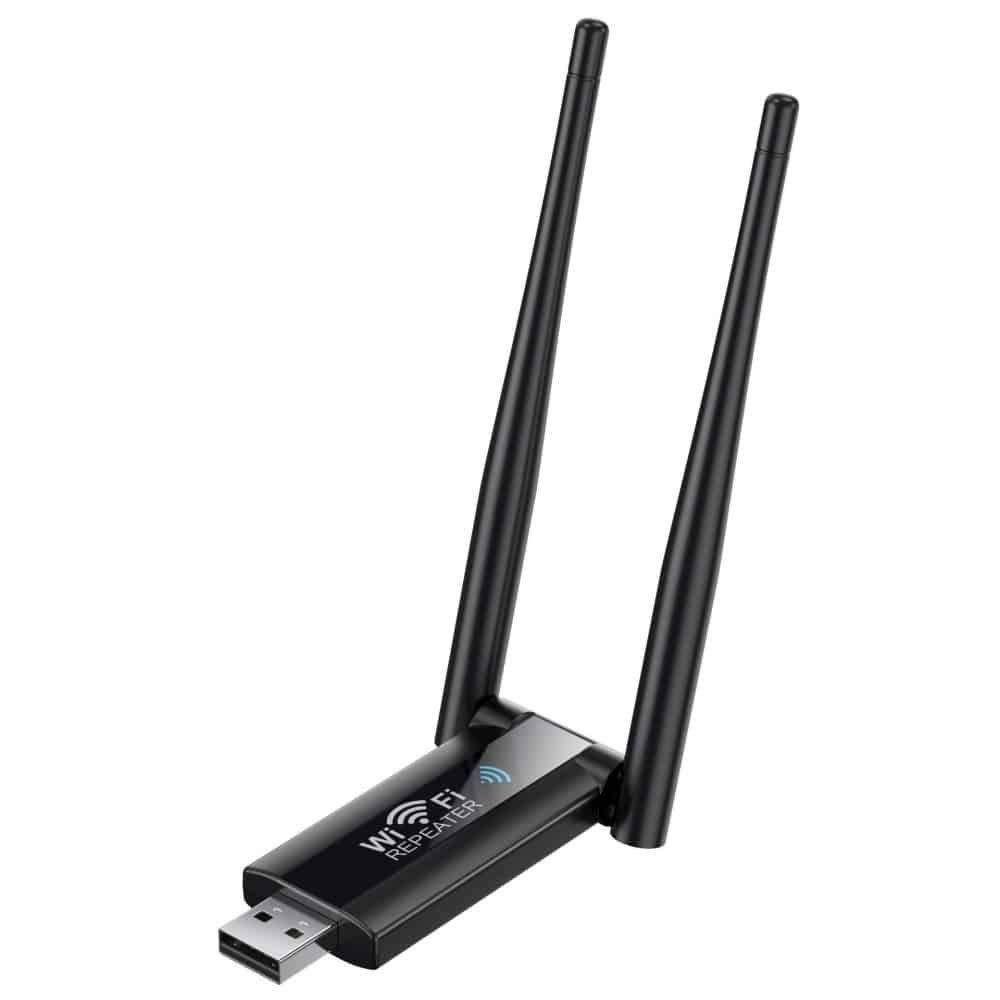
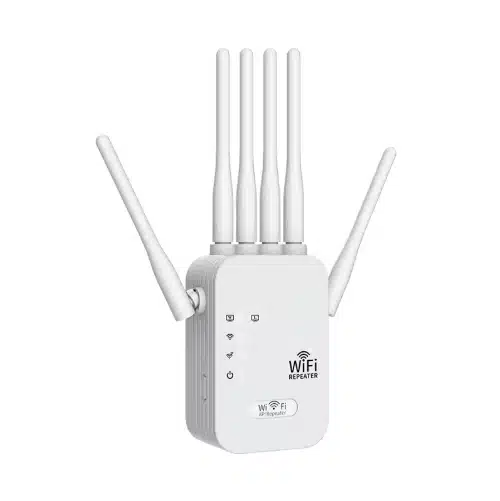
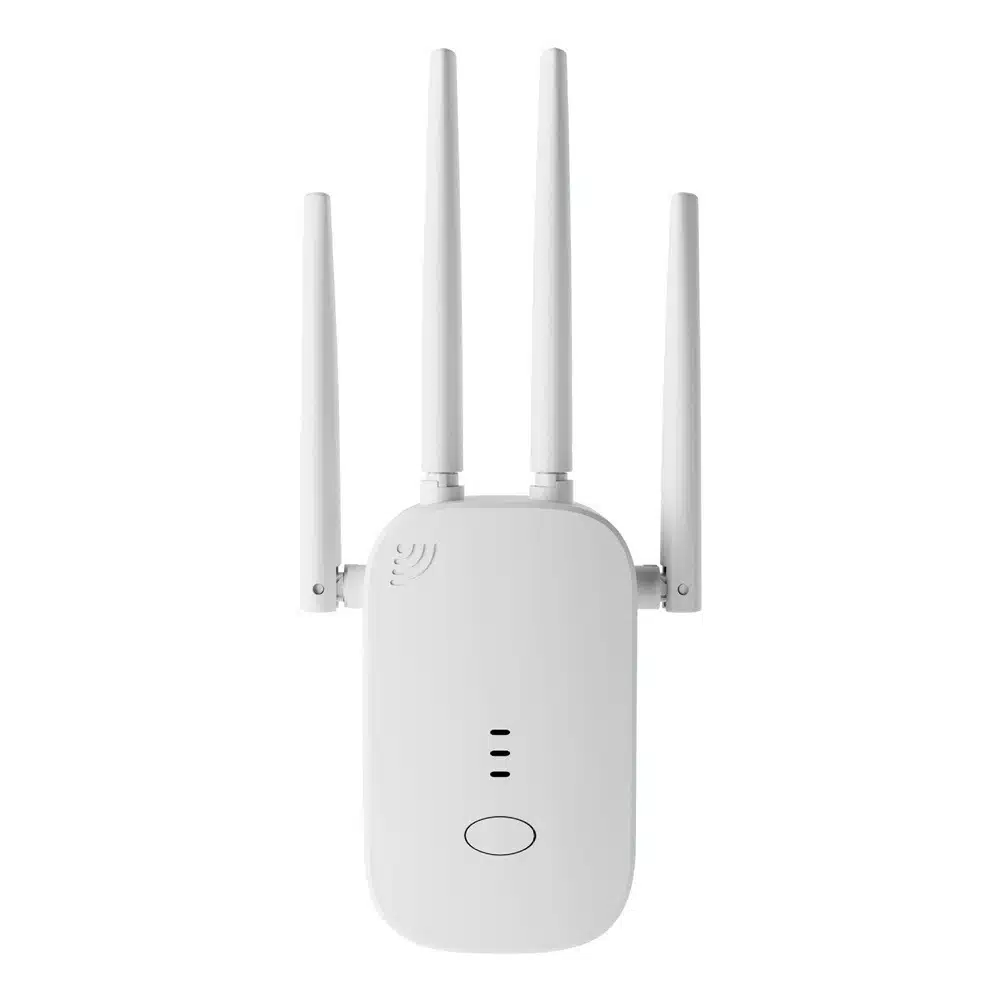
Home repeater buyers usually narrow products by physical format, setup method, and connection need first. These product classes help move from general home-use intent to more specific repeater pages by installation style, interface, and wireless tier.
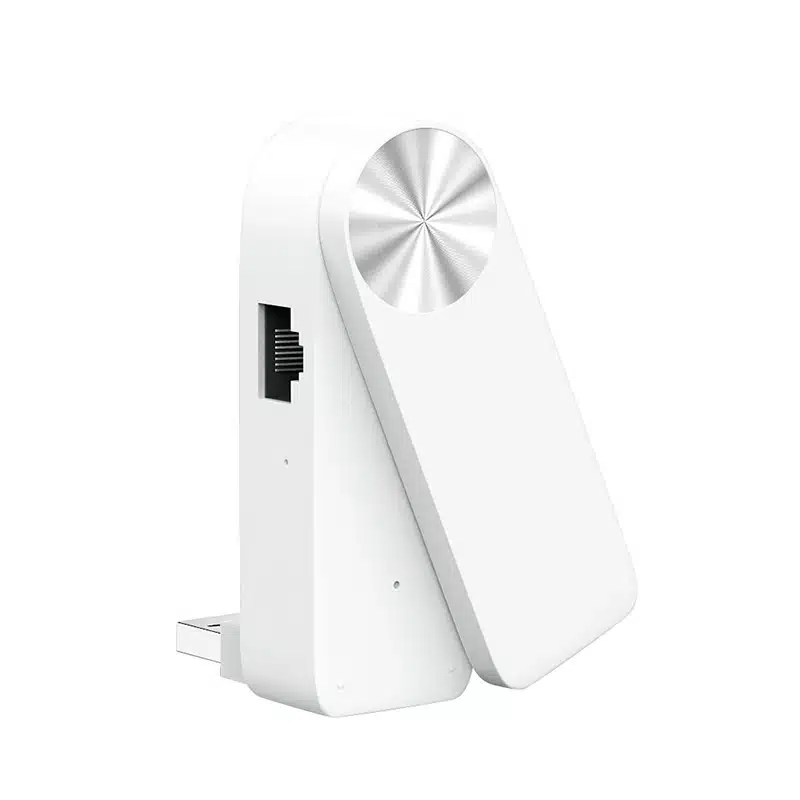
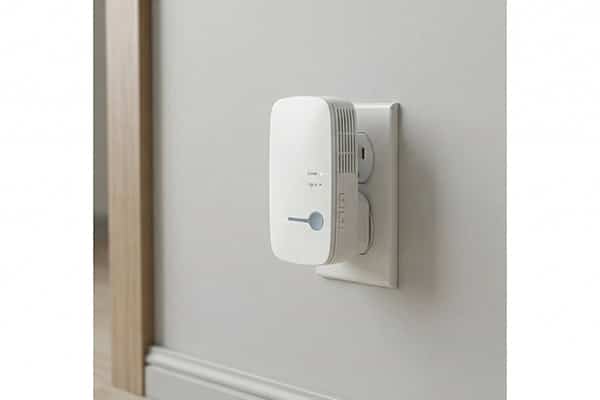
Plug WiFi Repeaters
Best for simple indoor deployment in bedrooms, hallways, apartments, and standard home layouts.
Why Home WiFi Repeaters Are a Separate Buying Category
Home repeater buyers usually start with indoor coverage needs, room layout, and ease of setup. That makes “Home” a useful category layer between the general repeater overview page and deeper product pages by wireless standard or hardware format.
Indoor Coverage Comes First
Home buyers usually start with weak-signal areas, not protocol terms.
Home Setup Has Different Priorities
Ease of installation matters more in home deployment.
It Prevents Scenario Confusion
A separate home category helps define the indoor-use boundary.
It Creates a Better Navigation Layer
This page connects broad category traffic to deeper product paths.
In short, the Home category is not a duplicate layer — it is the scenario-based navigation step that helps buyers move from residential use needs to the right repeater standard, form factor, or feature page.
Quick Evidence Bar
Indoor-first buying intent
Simple setup matters
Compact retail-friendly design
Better category-to-subcategory navigation
What Matters Most in a Home WiFi Repeater
Home repeater selection should start with coverage goal, room layout, setup method, and client mix. In residential deployment, the right hardware format and wireless tier often matter more than headline speed alone.
For home use, buyers should first define where the signal gap is, how many devices share the network, whether a wired port is needed, and how simple setup must be. Wireless generation should then be used to set the right product tier.
Buying Factor
What Buyers Should Focus On
Coverage target
bedroom, living room, upstairs, hallway, garage-side indoor area
Band strategy
2.4 GHz for wider reach, 5 GHz for faster short-range indoor use
Device density
phones, tablets, TVs, laptops, cameras, smart home devices
Port requirement
whether an Ethernet port is needed for TV, console, or desktop corner
Setup style
WPS, simple web UI, app setup, or pre-configured OEM firmware
Product tier
Wireless-N, WiFi 5, WiFi 6, or WiFi 7 depending on market and positioning
Evidence Chips
Which Standard Makes More Sense for Home WiFi Repeaters
For most current home repeater programs, WiFi 5 and WiFi 6 form the commercial core, while WiFi 7 works better as a premium or future-ready tier.
Standard
Best For
Key Technical Direction
Home-Use Judgment
WiFi 5
mainstream home retail, mature cost-sensitive programs
5 GHz, up to 256-QAM, up to 160 MHz, downlink MU-MIMO
Better for flagship or high-end home repeater SKUs
Table support: Wi-Fi 5 feature direction from 802.11ac white papers; Wi-Fi 6 and Wi-Fi 7 feature direction from Intel technical materials.
WiFi 5: The Mature Mainstream Tier
Best for stable, mainstream home repeater programs where mature ecosystem fit and cost control matter.
WiFi 6: The Strongest All-Round Upgrade for Home Use
Best for families with more devices, heavier concurrent traffic, and stronger upgrade expectations.
WiFi 7: The Premium and Future-Ready Tier
Best for flagship home repeater models and premium product-line positioning.
Quick Selection Logic
This three-step positioning is an inference from the standards’ feature sets and typical home-market product segmentation.
Factory Evidence Behind Home Repeater OEM Programs
For home WiFi repeater programs, buyers need more than product claims. They need evidence on output capacity, delivery stability, firmware flexibility, and repeatable manufacturing control.
Hardware & PCBA Engineering
Built for buyers who need more than a standard public-board solution.
Firmware & Software Support
Suitable for projects that need branded UI, protocol features, or secondary development.
Rapid Tooling & ID Design
Designed for projects that need private mold, modified housing, or faster sample validation.
RF Testing & Quality Control
Used to support more stable wireless performance and lower production risk.
Production Capacity
Suitable for repeat orders, peak-season supply, and distributor-level programs.
Lead Time & Supply Chain
Built for faster rollout when the project uses mature repeater platforms.
Typical OEM / ODM Scope
OEM / ODM Item
Typical Support
What Buyer Can Confirm
Logo / branding
Yes
Device logo, label, carton artwork
Plug localization
Yes
EU / US / UK / AU plug options
Packaging customization
Yes
Gift box, carton mark, manual layout
Web UI / app branding
Project-based
UI screenshot or branding sample
Firmware feature adjustment
Project-based
Function list confirmation
Memory / flash configuration
Project-based
BOM / spec confirmation
Certification support
Project-based
Compliance file path by market
Sample validation
Yes
Pre-production sample review
Pilot run / trial order
Project-based
Trial quantity discussion
Mass production release
Yes
QC checkpoints after approval
For home WiFi repeater projects, factory evidence should prove not only that products can be made, but that they can be scaled, customized, validated, and delivered with repeatable control.
Need a reliable Home WiFi repeater OEM / ODM partner? Talk to our team about firmware, housing, interface, and packaging customization.
These questions cover the most common concerns around indoor deployment, product tier selection, and OEM planning for home WiFi repeater programs.
1. What defines a true home WiFi repeater product?
A true home WiFi repeater is designed for indoor room-to-room coverage extension, not outdoor relay or long-distance bridging. The key traits are compact form factor, simple setup, and residential deployment fit.
2. What matters more in home repeater selection: speed tier or placement logic?
Placement logic comes first. In home deployment, a correctly placed repeater in a mid-signal zone usually matters more than choosing a higher advertised speed class without a stable uplink.
3. When is a plug-in repeater a better choice than a desktop-style unit?
A plug-in repeater is better when the priority is low installation friction, compact indoor placement, and retail-friendly deployment. Desktop-style units make more sense only when extra ports, antennas, or larger housing are part of the SKU strategy.
4. Is Ethernet still important on a home WiFi repeater?
Yes. An Ethernet port is still valuable for TVs, consoles, desktop corners, and mixed wired-wireless use, and it also helps create a clearer product tier above entry-level repeater-only models.
5. Why is WiFi 6 usually the strongest mainstream upgrade for home repeaters?
Because WiFi 6 improves multi-device efficiency, not just peak speed. For home use, that matters more in real deployment than chasing a higher headline spec without considering client density.
6. Should every home repeater line move directly to WiFi 7?
No. WiFi 7 is better used as a premium or future-ready tier, while WiFi 5 and WiFi 6 usually remain the commercial core for broader home-market programs.
7. What is the main difference between a home repeater page and a WiFi 6 or WiFi 7 repeater page?
A home repeater page is scenario-led. A WiFi 6 or WiFi 7 page is standard-led. One starts from residential use need; the other starts from wireless generation.
8. Are “home WiFi repeater,” “range extender,” and “signal booster” different product categories?
Usually not in practical market language. They are often different buying terms for closely related indoor coverage products, and the real separation should be done by deployment scenario, structure, and feature tier.
9. What proves real OEM capability in home repeater projects?
Not just logo printing. Real OEM capability means chipset path, firmware scope, plug-type adaptation, tooling speed, validation process, and delivery control are all clearly defined.
10. What should B2B buyers check first before selecting a home repeater supplier?
Check these five first: product tier clarity, installation form factor, firmware path, production capacity, and validation standard. If these are vague, the supplier is not yet presenting a strong repeater program.
Contact Us
Please fill out the form below, and our professional consultants will assist you as soon as possible, typically within 24 hours.
Contact Information
Phone: +8618682468703
WhatsApp: +8618682468703
Email: addway.wang@lgxlgx.com
Address: Room 301, Building A2, Qiangrong East Industrial Zone, No. 723 Zhoushi Road, Hangcheng Street, Shenzhen, Guangdong, China
Scroll to Top
Contact us
Please fill out this form with a brief description of your issue and we will get back to you as soon as possible.