WiFi 7 Repeaters
Built around the latest WiFi 7 feature set, these repeaters are designed for higher bandwidth, lower latency potential, and tri-band network expansion for demanding environments.
-
Up to 320 MHz channels
Wider spectrum support than mainstream WiFi 6 designs.
-
4K-QAM ready architecture
Higher modulation efficiency under suitable signal conditions.
-
Multi-Link Operation (MLO)
Enables traffic handling across multiple links in supported ecosystems.
-
Tri-band path: 2.4 / 5 / 6 GHz
Built for next-generation spectrum usage and device compatibility.
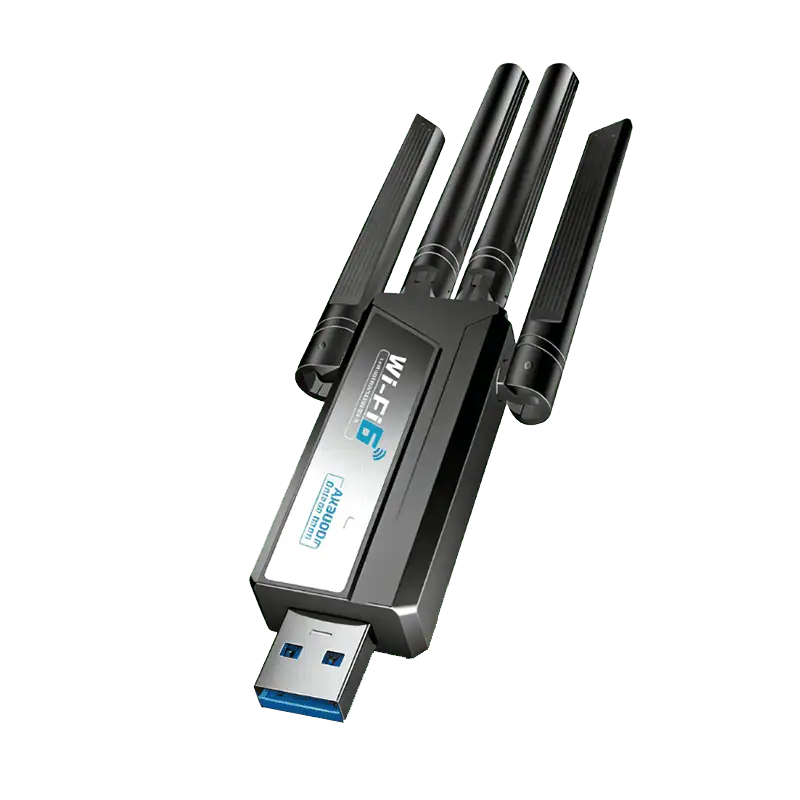
WiFi Repeater Categories
By Standard
-
BE-Class WiFi 7 Repeater Direction
-
Tri-Band WiFi 7 Repeater Direction
-
WiFi 7 LAN Port Repeater
By Scenario
-
Dual-Band Outdoor Coverage Repeater
-
External Antenna Outdoor Repeater
-
LAN Port Outdoor WiFi Extender
-
OEM Outdoor Repeater Direction
-
Long Range External Antenna Repeater
-
Dual-Band Long Range WiFi Extender
-
Multi-Antenna Outdoor Repeater
-
OEM Long Range Outdoor Direction
-
USB-Powered Travel WiFi Repeater
-
Compact Dual-Band Camper Repeater
-
Portable WiFi 6 Repeater
-
Small LAN Port RV Repeater
By Installation
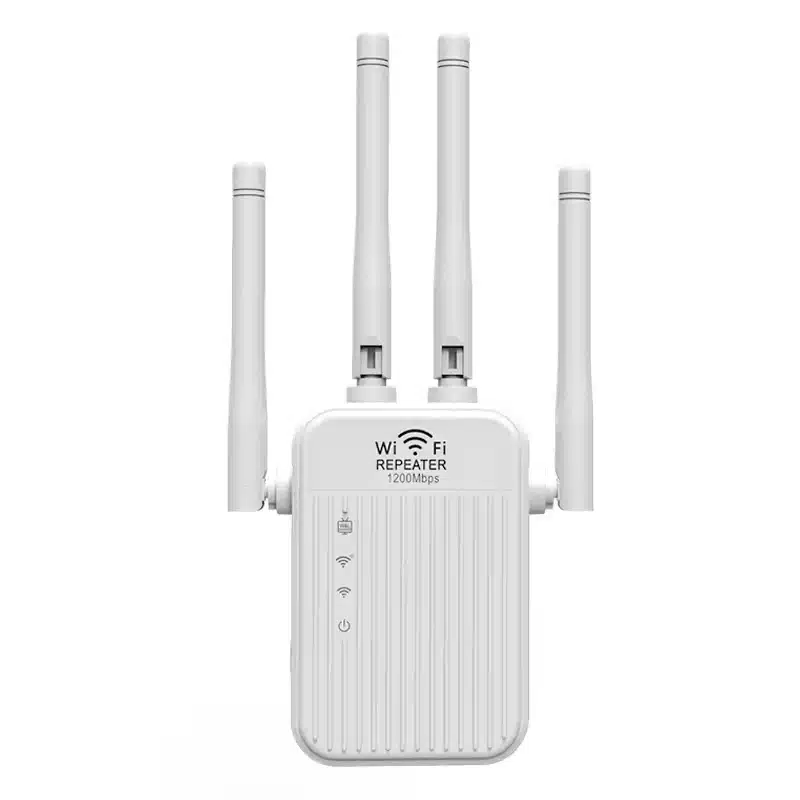
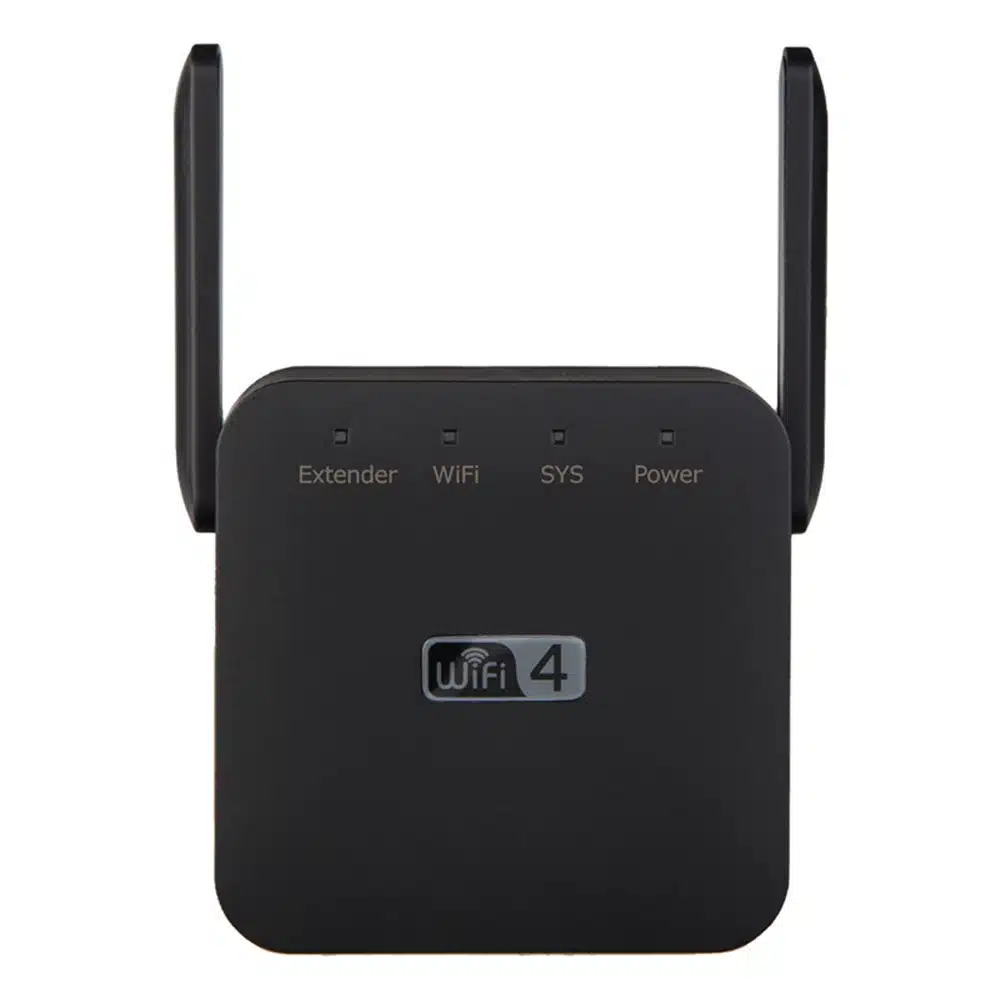
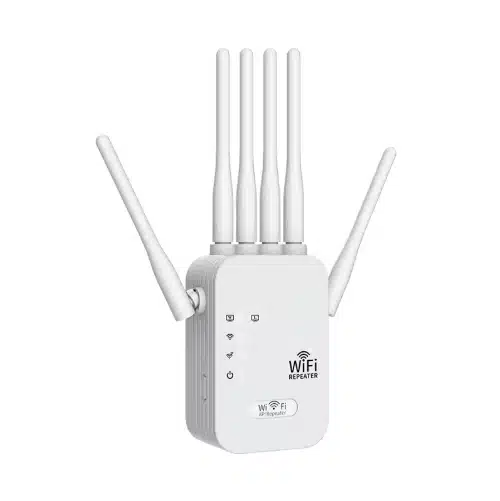
What Makes WiFi 7 Repeaters Different
WiFi 7 repeaters are not just faster versions of earlier repeaters. They are built around wider channel support, higher modulation efficiency, and Multi-Link Operation, which together create a higher performance ceiling for next-generation wireless expansion.
Wider Channel Potential
WiFi 7 certified products already show support for 320 MHz channel width in 6 GHz, giving the standard a wider bandwidth path than mainstream WiFi 6 designs.
Higher Modulation Ceiling
With 4096-QAM support, WiFi 7 increases peak spectral efficiency under suitable signal conditions.
Multi-Link Operation
MLO allows supported devices to use multiple links across bands, improving throughput potential, latency behavior, and connection reliability.
Stronger Next-Gen Ecosystem Fit
Wi-Fi CERTIFIED 7 products have been officially certified since January 2024 across multiple vendors, showing that the ecosystem is already commercial, not conceptual.
Core Differences at a Glance
| Item | WiFi 6 Repeater | WiFi 7 Repeater |
|---|---|---|
| Channel path | Up to 160 MHz common path | Up to 320 MHz in supported 6 GHz products |
| Modulation | 1024-QAM | 4096-QAM |
| Multi-link capability | No MLO | MLO supported |
| Product positioning | Mature mainstream | Next-gen / premium line |
Note: Actual repeater performance depends on chipset platform, antenna design, client capability, firmware optimization, spectrum availability, and deployment conditions.
Quick Technical Evidence Snapshot
WiFi 7 repeaters are based on real standard-level upgrades. The most important evidence points include wider channels, higher modulation, multi-link capability, and an already active commercial ecosystem.
320 MHz Channel Support
WiFi 7 supports up to 320 MHz of channel bandwidth, compared with 160 MHz in WiFi 6 / 6E paths. This creates a higher bandwidth ceiling in supported 6 GHz environments.
4K-QAM Efficiency
WiFi 7 introduces 4096-QAM, increasing modulation density beyond WiFi 6. This helps raise peak spectral efficiency when signal quality is strong enough.
MLO Multi-Link Operation
WiFi 7 supports Multi-Link Operation, allowing supported devices to connect across multiple bands for better traffic handling, lower latency potential, and stronger reliability.
Since 2024 Certified Ecosystem Already Active
Wi-Fi CERTIFIED 7 products are already in the market, showing that WiFi 7 is part of a real commercial ecosystem rather than a future-only specification.
Note: Actual repeater performance depends on chipset platform, channel width, antenna design, firmware optimization, client capability, spectrum availability, and deployment conditions.
WiFi 6 vs WiFi 7 Repeater Comparison
WiFi 6 repeaters remain a strong mainstream option for cost-sensitive projects, while WiFi 7 repeaters are better suited to premium product lines, next-generation ecosystems, and higher-performance positioning. Wi-Fi 7 brings official support for up to 320 MHz channels, 4096-QAM, and Multi-Link Operation, while Wi-Fi 6 is generally associated with 160 MHz, 1024-QAM, and no MLO.
| Item | WiFi 6 Repeater | WiFi 7 Repeater | Buyer Meaning |
|---|---|---|---|
| Standard position | Mature mainstream generation | Newer premium generation | Helps define product line tier |
| Channel width path | Up to 160 MHz | Up to 320 MHz | More bandwidth headroom in supported setups |
| Modulation | 1024-QAM | 4096-QAM | Higher peak efficiency potential |
| Multi-link capability | No MLO | MLO supported | Better next-gen architecture positioning |
| Ecosystem maturity | Broad and mature | Commercially active and growing | WiFi 7 is no longer just roadmap-level |
| Best fit | Cost-sensitive mainstream projects | Premium / flagship / future-ready SKUs | Choose based on target market and budget |
WiFi 6 is still the practical choice for mainstream programs. WiFi 7 is the better option for buyers who need a stronger next-gen product story and a higher performance ceiling.
Note: Actual repeater performance depends on chipset platform, antenna design, client capability, channel width, spectrum availability, firmware optimization, and deployment conditions. Intel’s Wi-Fi 7 materials also frame several benefits around supported devices, supported bands, and environmental conditions rather than guaranteeing the same outcome everywhere.
Where WiFi 7 Repeaters Make More Sense
WiFi 7 repeaters are most valuable in projects that need stronger bandwidth headroom, better multi-device handling, lower-latency potential, or a clearer next-generation market position.

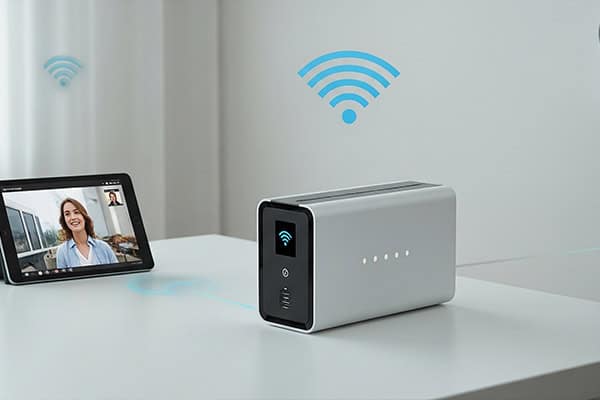
Premium Smart Homes
-
Better for high-end multi-device households
-
Stronger fit for 4K / 8K streaming environments
-
Higher bandwidth ceiling for premium home networking
-
Suitable for buyers targeting premium home WiFi products
Best for premium household networking, not basic range extension.
Gaming and Low-Latency Use
-
Better aligned with low-latency product positioning
-
MLO improves multi-link traffic flexibility
-
More suitable for real-time traffic environments
-
Stronger fit for gaming and prosumer networking products
Best for premium gaming and real-time traffic scenarios.

Advanced Retail / ISP Product Lines
-
Useful for premium SKU planning
-
Stronger for next-generation retail messaging
-
Helps create clearer product line differentiation
-
Suitable for channel and branded upgrade programs
Best when a product line needs a clear premium tier.

Future-Facing Multi-Room Networks
-
Higher headroom for growing traffic demand
-
Better fit for long-life premium products
-
Stronger future-ready product positioning
-
Suitable for multi-room, high-load home or office use
Best for projects planning beyond today’s basic coverage needs.
WiFi 7 repeaters make the most sense for premium, future-ready, and higher-load projects. For basic coverage, entry-level home networking, or price-sensitive programs, WiFi 6 repeaters may still be the more practical option.
OEM / ODM Evidence for WiFi 7 Repeater Projects
For WiFi 7 repeater projects, OEM / ODM capability should be shown through actual customization scope, validation workflow, and project deliverables — not generic factory claims.
Hardware & PCBA Engineering
Built for buyers who need more than a standard public-board solution.
-
100% in-house hardware development
-
MediaTek / Realtek platform integration
-
Custom ports, power, and PCB layout support
Firmware & Software Support
Suitable for projects that need branded UI, protocol features, or secondary development.
-
OpenWrt-based customization
-
TR-069 / TR-181 integration
-
Multi-language UI and white-label web panel
Rapid Tooling & ID Design
Designed for projects that need private mold, modified housing, or faster sample validation.
-
T0 sample in 25 days
-
In-house tooling and mold-flow review
-
Custom material, finish, and logo options
RF Testing & Quality Control
Used to support more stable wireless performance and lower production risk.
-
In-house 3D OTA chamber
-
LitePoint IQxel calibration
-
Burn-in test from -20°C to 60°C
Production Capacity
Suitable for repeat orders, peak-season supply, and distributor-level programs.
-
8 automated Fuji SMT lines
-
30,000 units/day peak capacity
-
10,000 m² smart manufacturing facility
Lead Time & Supply Chain
Built for faster rollout when the project uses mature repeater platforms.
-
35–45 days for mature PCBA orders
-
Strategic chipset supply support
-
Better fit for scalable B2B programs
Typical OEM / ODM Scope
| OEM / ODM Item | Typical Support | What Buyer Can Confirm |
|---|---|---|
| Logo / branding | Yes | Device logo, label, carton artwork |
| Plug localization | Yes | EU / US / UK / AU plug options |
| Packaging customization | Yes | Gift box, carton mark, manual layout |
| Web UI / app branding | Project-based | UI screenshot or branding sample |
| Firmware feature adjustment | Project-based | Function list confirmation |
| Memory / flash configuration | Project-based | BOM / spec confirmation |
| Certification support | Project-based | Compliance file path by market |
| Sample validation | Yes | Pre-production sample review |
| Pilot run / trial order | Project-based | Trial quantity discussion |
| Mass production release | Yes | QC checkpoints after approval |
Note: OEM / ODM scope for WiFi 7 repeater projects depends on chipset platform, firmware path, compliance requirements, MOQ, and target market. Not every customization item applies equally to every project.
Need a reliable WiFi 7 repeater OEM / ODM partner?
Talk to our team about firmware, housing, interface, and packaging customization.
FAQ About WiFi 7 Repeaters
Below are some of the most common questions buyers ask when evaluating WiFi 7 repeaters for retail, OEM, and next-generation networking projects.
What is a WiFi 7 repeater?
A WiFi 7 repeater is a wireless range extension device built around the WiFi 7 feature set. Depending on product design, it may support capabilities such as 320 MHz channels, 4096-QAM, and Multi-Link Operation.
How is a WiFi 7 repeater different from a WiFi 6 repeater?
WiFi 7 adds wider channel support, higher modulation, and MLO. In simple terms, it offers a higher performance ceiling and a stronger next-generation product position, while WiFi 6 remains a mature mainstream choice.
Is a WiFi 7 repeater always faster than a WiFi 6 repeater?
Not always in every environment. WiFi 7 has a higher theoretical ceiling, but actual performance still depends on chipset platform, firmware, client support, spectrum conditions, and installation quality.
Do WiFi 7 repeaters require 6 GHz to work?
Not necessarily. WiFi 7 is designed across 2.4 GHz, 5 GHz, and 6 GHz, but actual supported bands vary by model, certification scope, and regional regulations.
Are WiFi 7 repeaters backward compatible?
Generally yes in mixed-device environments, but older devices only use the features they support and will not gain WiFi 7-only capabilities.
Is WiFi 7 already commercially mature?
Yes. Wi-Fi CERTIFIED 7 products from multiple vendors have been officially certified since January 2024, showing that the ecosystem is already commercially active.
Who should choose a WiFi 7 repeater?
WiFi 7 repeaters make more sense for premium SKUs, next-generation retail lines, gaming-oriented positioning, and multi-device high-bandwidth environments. WiFi 6 is still practical for basic and cost-sensitive projects.
What OEM / ODM items are usually discussed?
Typical discussions may include branding, plug options, packaging, UI path, firmware scope, sample validation, and compliance requirements by target market.
Can a WiFi 7 repeater improve latency for gaming or real-time use?
WiFi 7 introduces MLO and other efficiency improvements that are intended to improve throughput, latency behavior, and reliability in supported environments. However, actual latency performance still depends on network design, interference, client support, and deployment conditions.
Does a higher BE class always mean better real-world repeater performance?
Not by itself. Market labels such as BE3600, BE6500, or BE9300 are useful for product positioning, but real-world performance still depends on chipset platform, antenna design, radio chain configuration, firmware optimization, connected clients, and installation conditions.
Find the Right WiFi Solution for Your Needs
Explore by Product Type
👉 Compare different WiFi expansion solutions based on performance and usage.
Explore by WiFi Standard
👉 Choose based on speed, performance, and compatibility.
Explore by Application Scenario
👉 Find the best solution for your specific environment.
Explore by Installation Type
👉 Please make your selection based on the wireless repeater’s interface and installation method.
Contact Us
Please fill out the form below, and our professional consultants will assist you as soon as possible, typically within 24 hours.
Contact Information
Phone: +8618682468703
WhatsApp: +8618682468703
Email: addway.wang@lgxlgx.com
Address: Room 301, Building A2, Qiangrong East Industrial Zone, No. 723 Zhoushi Road, Hangcheng Street, Shenzhen, Guangdong, China