WiFi 6 Repeater Manufacturer
WiFi 6 repeaters are now the mainstream upgrade class for buyers moving beyond WiFi 5 in dual-band coverage extension projects.
-
Wireless Standard: IEEE 802.11ax dual band
-
Typical Product Class: AX1800 / AX3000
-
Theoretical Max Standard Throughput: up to 9.6 Gbps
-
WiFi 6 vs WiFi 5 Theoretical Capacity: 9.6 Gbps vs 3.5 Gbps
-
1024-QAM Gain: up to 25% higher raw data rate vs 256-QAM
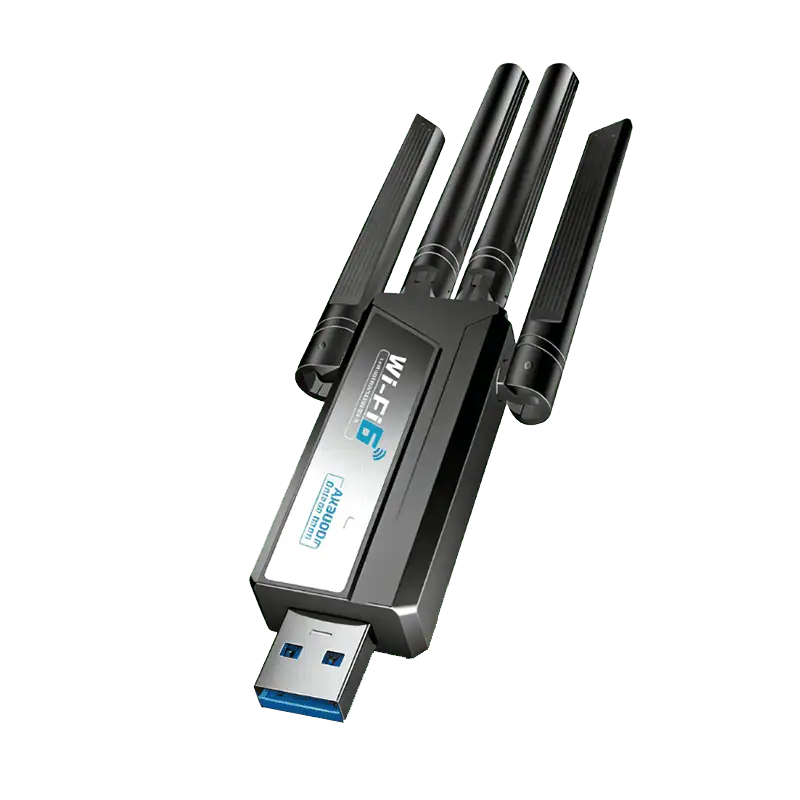
WiFi Repeater Categories
By Standard
-
BE-Class WiFi 7 Repeater Direction
-
Tri-Band WiFi 7 Repeater Direction
-
WiFi 7 LAN Port Repeater
By Scenario
-
Dual-Band Outdoor Coverage Repeater
-
External Antenna Outdoor Repeater
-
LAN Port Outdoor WiFi Extender
-
OEM Outdoor Repeater Direction
-
Long Range External Antenna Repeater
-
Dual-Band Long Range WiFi Extender
-
Multi-Antenna Outdoor Repeater
-
OEM Long Range Outdoor Direction
-
USB-Powered Travel WiFi Repeater
-
Compact Dual-Band Camper Repeater
-
Portable WiFi 6 Repeater
-
Small LAN Port RV Repeater
By Installation
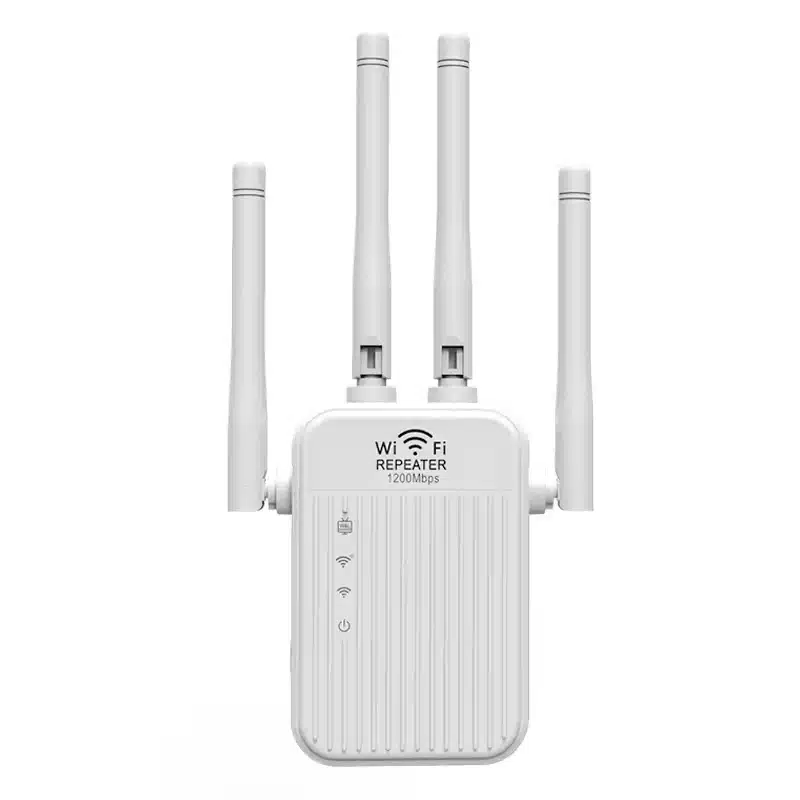
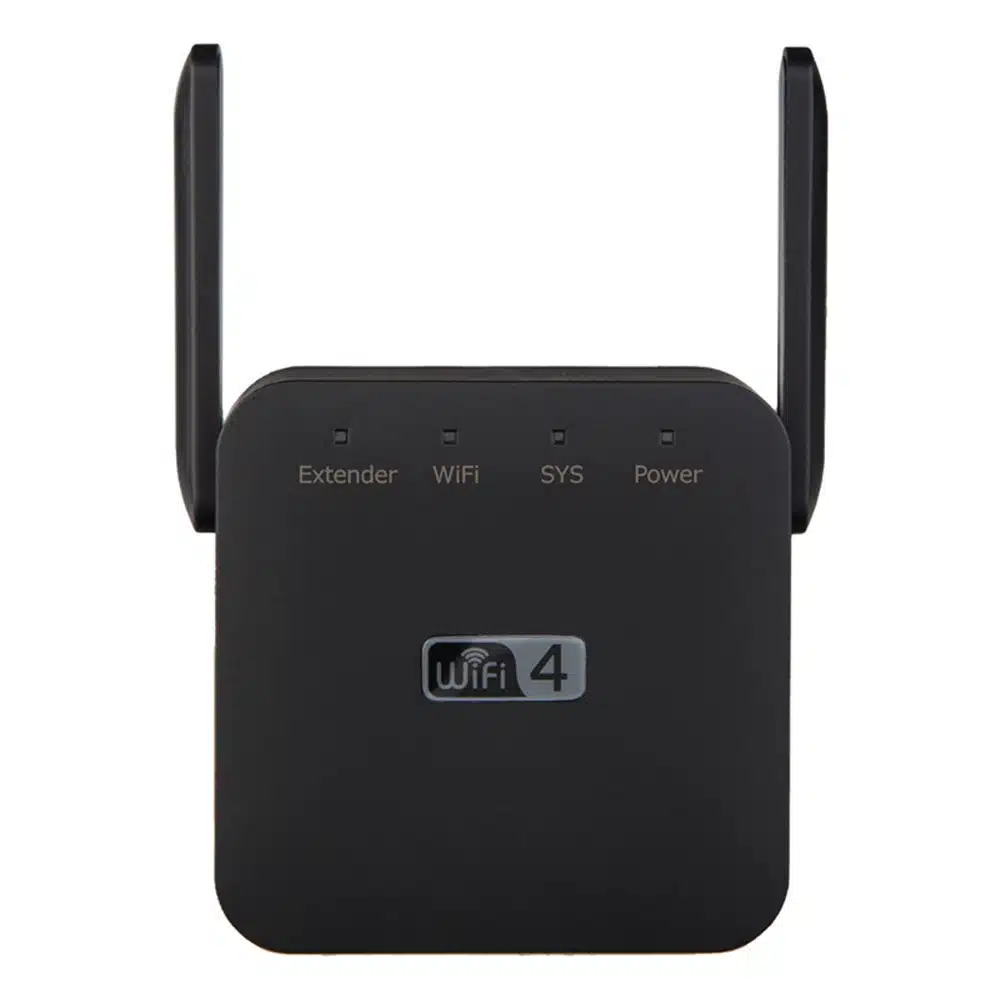
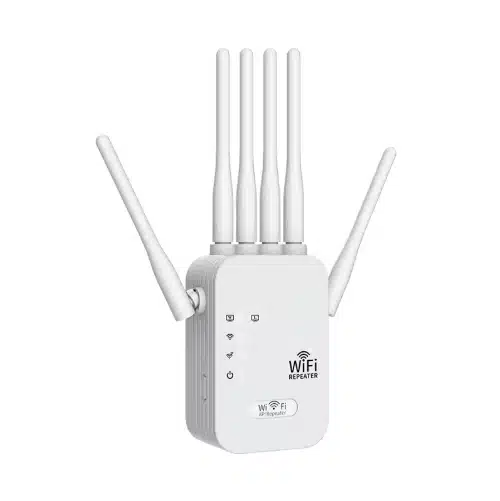
Why Choose WiFi 6 Repeaters
WiFi 6 repeaters are not just a higher-speed replacement for WiFi 5 models. Their main advantage is better efficiency when more devices, more traffic types, and more interference compete for the same wireless airtime.
Higher Standard Capacity
WiFi 6 offers a much higher theoretical capacity ceiling than WiFi 5, giving buyers a stronger mainstream upgrade class for current dual-band projects.
- WiFi 6 theoretical maximum: up to 9.6 Gbps
- WiFi 5 theoretical maximum: about 3.5 Gbps
- Better positioned for newer client devices and higher-throughput product lines
Better Multi-Device Efficiency
The real value of WiFi 6 repeaters shows up when more devices share the same network, not only when testing peak speed with one client.
- OFDMA improves channel sharing across multiple users
- MU-MIMO helps support more simultaneous transmissions
- 1024-QAM can increase raw data rate by about 25% versus 256-QAM
Stronger Performance Under Load
Public dense-user testing shows WiFi 6 holds up much better than WiFi 5 when user count and airtime pressure rise.
- In Intel testing at 80 MHz, WiFi 6 handled 25 users with only about 20% throughput degradation
- WiFi 5 showed about 80% degradation at 15 users under the same test method
- WiFi 6 also showed much lower latency increase and near-zero packet loss
Better Fit for Current Upgrade Projects
WiFi 6 repeaters are a more practical mainstream choice for projects upgrading from WiFi 5 without jumping to the cost level of WiFi 7.
- Better aligned with current client-device generations
- More suitable for apartments, hospitality rooms, SOHO, and mixed-device homes
- A stronger balance between performance upgrade and cost control than WiFi 7
For most current dual-band repeater projects, WiFi 6 is the strongest mainstream upgrade path when buyers need better multi-device efficiency without moving into full WiFi 7 cost territory.
WiFi 6 Repeater Technical Snapshot
The table below gives a quick technical overview of mainstream WiFi 6 repeater configurations. Exact specifications vary by model, chipset, antenna design, firmware, and interface options.
Typical Technical Snapshot of Mainstream WiFi 6 Repeaters
| Item | Typical WiFi 6 Repeater Snapshot |
|---|---|
| Wireless Standard | IEEE 802.11ax |
| Frequency Bands | 2.4 GHz + 5 GHz dual band |
| Common Speed Classes | AX1800 / AX3000 |
| Typical AX1800 Rate | 574 Mbps @ 2.4 GHz + 1201 Mbps @ 5 GHz |
| Typical AX3000 Rate | 574 Mbps @ 2.4 GHz + 2402 Mbps @ 5 GHz |
| Key WiFi 6 Features | OFDMA / MU-MIMO / 1024-QAM / BSS Coloring / TWT |
| Working Modes | Range Extender / Access Point |
| Ethernet Option | Fast Ethernet or Gigabit Ethernet depending on model |
| Setup Methods | WPS / Web UI / App depending on firmware |
| Typical Form Factors | Wall-plug / compact desktop |
| Best-Fit Scenarios | apartment / hospitality / SOHO / mixed-device home |
| Compatibility | backward compatible with earlier WiFi generations |
Speed Class Is Not Real Throughput
AX1800 and AX3000 are class-level labels based on combined theoretical link rates, not guaranteed real-world user throughput.
Placement Still Matters
Repeater performance depends on router signal quality, placement, wall loss, channel width, and interference conditions.
Feature Availability Varies by Model
AP mode, Ethernet speed, firmware UI, and mesh-related functions depend on the specific hardware platform and software configuration.
WiFi 5 vs WiFi 6 vs WiFi 7 Repeaters
The three repeater generations differ less in naming than in project fit. For most current upgrade projects, WiFi 6 is the mainstream balance point between cost, capacity, and multi-device efficiency, while WiFi 5 remains the budget option and WiFi 7 is the premium forward-looking tier.
Quick Comparison of WiFi 5, WiFi 6, and WiFi 7 Repeater Classes
| Standard | Positioning | Main Technical Strength | Best For | Main Trade-Off |
|---|---|---|---|---|
| WiFi 5 | Mature value tier | widely deployed dual-band AC platform | cost-sensitive mainstream projects | lower efficiency in dense multi-device environments |
| WiFi 6 | Current mainstream upgrade tier | better multi-device efficiency, higher capacity, stronger current-device fit | apartments, hospitality, SOHO, upgrade projects | higher BOM and selling price than WiFi 5 |
| WiFi 7 | Premium forward-looking tier | multi-link operation, wider channels, higher-order modulation, more headroom | premium positioning and next-gen flagship projects | highest cost and stronger ecosystem dependence |
| Item | WiFi 5 | WiFi 6 | WiFi 7 |
|---|---|---|---|
| Core Standard | 802.11ac | 802.11ax | 802.11be |
| Multi-Device Efficiency | Basic | Stronger with OFDMA + MU-MIMO | More advanced |
| Typical Positioning | budget / mature | mainstream upgrade | premium / next-gen |
| Best Buying Logic | low-cost rollout | balanced upgrade | flagship roadmap |
Choose WiFi 5 When Cost Control Comes First
WiFi 5 repeaters still make sense for value-oriented projects where mature AC platforms and lower price pressure matter more than higher multi-device efficiency.
Choose WiFi 6 for Mainstream Upgrade Projects
WiFi 6 repeaters are the strongest mainstream choice when buyers want a real step up from WiFi 5 without moving into full WiFi 7 pricing and positioning.
Choose WiFi 7 for Premium and Forward-Looking Lines
WiFi 7 repeaters fit premium product roadmaps better when next-generation positioning, advanced wireless features, and long-term flagship differentiation matter more than cost control.
For most current dual-band repeater programs, WiFi 6 is the most practical upgrade tier because it improves multi-device efficiency and product positioning without pushing the project into the highest-cost WiFi 7 bracket.
Where WiFi 6 Repeaters Work Best
WiFi 6 repeaters work best in environments where the main router signal is still usable, but older repeater classes struggle with device density, mixed traffic, or newer client expectations. Their value is strongest in projects that need better multi-device efficiency rather than just a basic coverage boost.
Apartment & Multi-Room Homes
WiFi 6 repeaters are a stronger fit for homes and apartments where many everyday devices compete for the same wireless airtime across multiple rooms.
- Better for phone, TV, laptop, tablet, and smart home device mixes
- WiFi 6 is designed to improve efficiency in dense device environments
- A practical upgrade path for modern dual-band home networking
Hospitality Guest Rooms
WiFi 6 repeaters fit guest-room projects better when each room increasingly carries multiple personal devices and stable in-room coverage matters more than raw peak speed claims.
- Better aligned with multi-device guest behavior
- Useful where repeated room layouts need more consistent wireless extension
- Stronger efficiency fit than older repeater classes in denser usage environments
SOHO / Small Office
WiFi 6 repeaters work well in small offices where laptops, phones, printers, meeting traffic, and cloud apps share the same network throughout the day.
- Better for mixed office traffic and concurrent device use
- Public dense-user testing shows WiFi 6 holds up better than WiFi 5 under load
- A practical fit for upgrade projects that need better stability without moving to enterprise systems
Ethernet Bridge and Mixed Wired-Wireless Use
WiFi 6 repeaters with Ethernet ports are especially useful where users need wireless extension plus practical wired access for TVs, PCs, consoles, or IPTV boxes.
- Supports mixed wired and wireless deployment needs
- Gigabit Ethernet and AP mode are common value-adding features in this class
- More practical than signal-only positioning for many real deployment scenarios
WiFi 6 repeaters perform best when they are placed in locations that still receive a stable signal from the main router. They are most effective for extending usable coverage and improving multi-device experience, not for fixing a total dead zone with no backhaul signal.
OEM / ODM Evidence for WiFi 6 Repeater Projects
For WiFi 6 repeater buyers, OEM / ODM capability is not just about logo printing. It also depends on whether the supplier can support hardware design, firmware customization, RF validation, production readiness, and scalable delivery with measurable engineering control.
Hardware & PCBA Engineering
Built for buyers who need more than a standard public-board solution.
-
100% in-house hardware development
-
MediaTek / Realtek platform integration
-
Custom ports, power, and PCB layout support
Firmware & Software Support
Suitable for projects that need branded UI, protocol features, or secondary development.
-
OpenWrt-based customization
-
TR-069 / TR-181 integration
-
Multi-language UI and white-label web panel
Rapid Tooling & ID Design
Designed for projects that need private mold, modified housing, or faster sample validation.
-
T0 sample in 25 days
-
In-house tooling and mold-flow review
-
Custom material, finish, and logo options
RF Testing & Quality Control
Used to support more stable wireless performance and lower production risk.
-
In-house 3D OTA chamber
-
LitePoint IQxel calibration
-
Burn-in test from -20°C to 60°C
Production Capacity
Suitable for repeat orders, peak-season supply, and distributor-level programs.
-
8 automated Fuji SMT lines
-
30,000 units/day peak capacity
-
10,000 m² smart manufacturing facility
Lead Time & Supply Chain
Built for faster rollout when the project uses mature repeater platforms.
-
35–45 days for mature PCBA orders
-
Strategic chipset supply support
-
Better fit for scalable B2B programs
Our WiFi 6 repeater OEM / ODM support goes beyond branding. From hardware and firmware to tooling, RF validation, and scalable production, the goal is to help buyers launch repeatable products with clearer engineering scope, lead-time expectations, and manufacturing control.
Need a reliable WiFi 6 repeater OEM / ODM partner?
Talk to our team about firmware, housing, interface, and packaging customization.
FAQ About WiFi 6 Repeaters
What is a WiFi 6 repeater?
A WiFi 6 repeater is a wireless coverage extension device based on the 802.11ax standard. Compared with older repeater generations, WiFi 6 is designed to improve network efficiency in environments with more devices and more shared traffic.
What is a WiFi 6 repeater?
For most current upgrade projects, yes. The main difference is not only higher theoretical throughput, but better efficiency in multi-device environments and stronger fit for newer client devices.
Is a WiFi 6 repeater better than a WiFi 5 repeater?
It can improve usable network performance, but real-world speed depends on the main router, client devices, placement, interference, and backhaul quality. AX1800 and AX3000 are class-level theoretical labels, not guaranteed real-world throughput.
Does a WiFi 6 repeater increase real-world speed?
Not always. A repeater works best when it is installed in a location that still receives a usable signal from the main router. It extends coverage from that signal source rather than creating performance from a location with no workable backhaul.
How do I choose between AX1800 and AX3000 WiFi 6 repeaters?
Choose AX1800 for mainstream dual-band coverage extension where cost control and standard performance are the priority. Choose AX3000 when you want a stronger 5 GHz class, more headroom for multi-device traffic, and a more premium product position.
Do WiFi 6 repeaters support Ethernet ports and wired devices?
Many WiFi 6 repeaters do. This makes them useful for connecting smart TVs, PCs, game consoles, IPTV boxes, and other wired devices in mixed wired and wireless environments.
Can a WiFi 6 repeater work as an access point?
Many models can. In AP mode, the device creates WiFi from a wired Ethernet connection instead of only repeating an existing wireless signal.
Where do WiFi 6 repeaters work best?
They work best in apartments, hospitality rooms, SOHO spaces, and other environments where the main signal is still available but device density and mixed traffic make older repeater classes less efficient.
Where do WiFi 6 repeaters work best?
Yes. Depending on the supplier’s engineering capability, customization can include housing, logo, packaging, UI, firmware adaptation, protocol support, and project-specific PCBA changes.
Should buyers choose WiFi 6 now or move directly to WiFi 7?
For most mainstream dual-band repeater projects, WiFi 6 is the more practical upgrade tier. WiFi 7 is better suited to premium and forward-looking product lines where higher positioning matters more than tighter cost control.
Find the Right WiFi Solution for Your Needs
Explore by Product Type
👉 Compare different WiFi expansion solutions based on performance and usage.
Explore by WiFi Standard
👉 Choose based on speed, performance, and compatibility.
Explore by Application Scenario
👉 Find the best solution for your specific environment.
Explore by Installation Type
👉 Please make your selection based on the wireless repeater’s interface and installation method.
Contact Us
Please fill out the form below, and our professional consultants will assist you as soon as possible, typically within 24 hours.
Contact Information
Phone: +8618682468703
WhatsApp: +8618682468703
Email: addway.wang@lgxlgx.com
Address: Room 301, Building A2, Qiangrong East Industrial Zone, No. 723 Zhoushi Road, Hangcheng Street, Shenzhen, Guangdong, China