WiFi 4 Adapters
Explore WiFi 4 adapters for basic wireless connectivity, legacy device compatibility, and bulk OEM/ODM supply. Compare interface, chipset, antenna design, driver support, and deployment fit before selecting the right 802.11n adapter.
-
Basic 2.4GHz wireless access
-
Legacy PC or laptop compatibility
-
Cost-controlled bulk orders
-
Simple USB plug-in deployment
-
Stable entry-level OEM projects
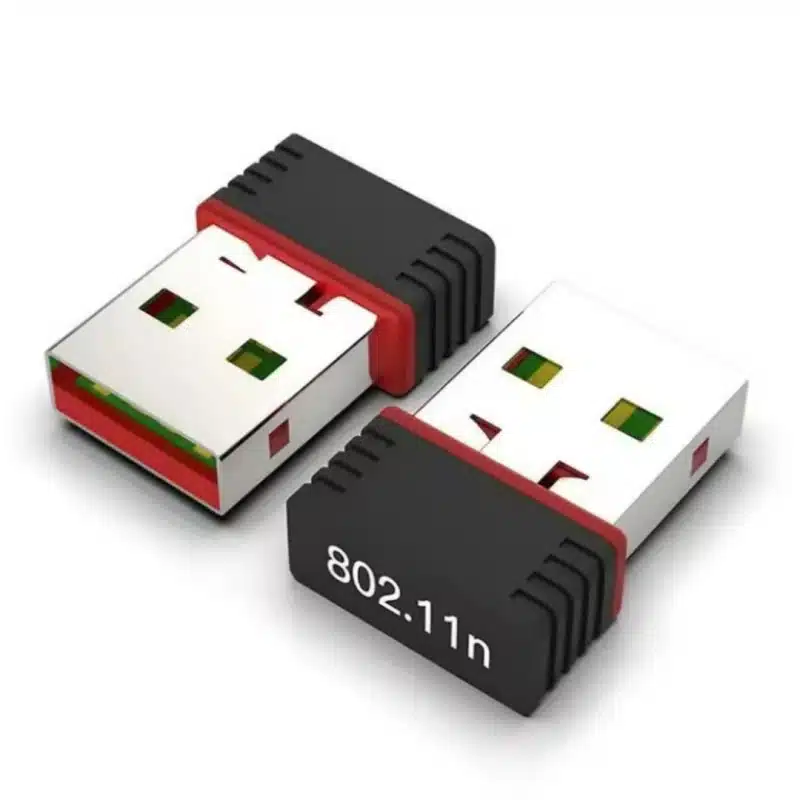
What Defines WiFi 4 Adapters
WiFi 4 adapters are mainly used for basic wireless connectivity, legacy device support, and cost-sensitive upgrade projects. This category is usually chosen for practical compatibility and controlled cost rather than for high-speed modern wireless performance.
Basic Wireless Upgrade
WiFi 4 adapters are commonly used to add simple wireless access to desktops, laptops, and other devices. They are better suited to basic connectivity needs than to performance-focused upgrade projects.
Legacy and Cost-Sensitive Fit
This category still makes sense when buyers need broad compatibility and lower BOM control. It is often selected for entry-level retail, replacement demand, and volume-driven projects.
Simpler Product Direction
Many WiFi 4 adapters are positioned around compact USB form factors, simpler hardware structures, and straightforward installation. This makes the category easier to use in basic wireless product lines.
More Than a Speed Label
Terms like 150M or 300M help describe product level, but they do not tell the full story. Buyers should still compare chipset, antenna design, driver support, and target device fit.
Clear Performance Boundary
WiFi 4 adapters are not the best choice for premium upgrades, higher-throughput tasks, or newer wireless expectations. Buyers with stronger speed and efficiency requirements should usually look at WiFi 5 or WiFi 6 adapters instead.
Best suited for
Legacy devices, basic office use, entry-level wireless upgrade, and cost-sensitive bulk supply.
Less suited for
Premium positioning, modern dual-band demand, and performance-focused wireless applications.
Market Terms vs More Accurate Technical Terms
| Market Term | More Accurate Technical Meaning |
|---|---|
| 150M USB WiFi adapter | Entry-level 802.11n USB wireless client adapter, often used for basic 2.4GHz access |
| 300M wireless dongle | Higher-tier WiFi 4 USB adapter, typically positioned for stronger 2.4GHz performance within the same generation |
| WiFi receiver | A client adapter for connecting a PC or laptop to a wireless network |
| Mini USB WiFi adapter | Compact-form wireless adapter where size may be prioritized over antenna gain |
| Plug and play WiFi adapter | Usually a commercial installation claim that still needs OS-version verification |
Featured WiFi 4 Adapter Models
Common WiFi 4 Adapter Types
WiFi 4 adapters are not all built for the same use case. Within this category, buyers usually compare them by size, antenna structure, device fit, and channel positioning rather than by the WiFi 4 label alone.
150M Compact USB Adapters
These models are commonly used for basic wireless access in desktops, laptops, and simple office environments. They are usually positioned as practical entry-level adapters for low-cost and straightforward deployment.
This type is suitable when buyers want an easy-to-sell product with compact size, simple installation, and broad commercial usability.
Nano WiFi 4 Adapters
Nano adapters are built for minimal size and lower visual impact. They are often used where a low-profile USB device is preferred, especially for laptop users or channels that value compact appearance.
This type makes more sense when portability and convenience matter more than larger antenna structure or stronger weak-signal positioning.
300M WiFi 4 Adapters
300M WiFi 4 adapters are usually positioned as a stronger option within the same generation. They are more suitable for buyers who still want to stay in the WiFi 4 segment but need a better product level for everyday use.
This type is often easier to position in projects where buyers want a clearer step up from basic entry-level models without moving into newer WiFi generations.
External-Antenna WiFi 4 Adapters
These models are designed for buyers who want a larger hardware profile, more visible product differentiation, or better signal positioning than ultra-compact adapters typically offer. They are often more suitable for desktop use and weak-signal environments.
This type can be easier to sell when the target market values visible antenna structure and stronger perceived reception capability.
Selection Note
The right WiFi 4 adapter type depends less on headline speed alone and more on target device, installation preference, antenna structure, and channel positioning. For B2B buyers, product form factor and deployment fit are often just as important as the wireless generation itself.
What Buyers Should Actually Compare
A WiFi 4 adapter should not be judged by speed label alone. Buyers should compare chipset, antenna structure, OS support, interface type, and the product’s real deployment fit.
| What to Compare | Why It Matters | What Buyers Should Confirm |
|---|---|---|
| Chipset Platform | The chipset affects driver support, stability, and batch consistency. | Confirm the exact chipset and whether future batches will stay the same. |
| Rated Speed | Labels such as 150M or 300M show product level, not real throughput. | Treat speed as a positioning reference, not a real-use guarantee. |
| Antenna Structure | Antenna design changes reception behavior and product positioning. | Check whether the project needs nano, compact, or external-antenna models. |
| USB Interface | Interface type affects compatibility and product level. | Confirm whether the adapter is USB 2.0 or USB 3.0 and whether it fits the target use. |
| OS Support | Driver support directly affects user experience and after-sales risk. | Verify Windows, Linux, and Mac compatibility before bulk purchase. |
| Target Device | Desktop and laptop use do not always require the same adapter style. | Confirm whether the SKU is better suited for desktop, laptop, or mixed use. |
| Packaging and Labeling | Bulk supply needs packaging readiness, not just working hardware. | Confirm logo, barcode, manual, carton setup, and label format. |
Do not compare by speed alone
A higher Mbps figure does not automatically mean a better buying decision.
Driver support matters in real projects
Clear OS compatibility often matters more than small paper differences in specification.
Form factor affects product fit
Nano, compact, and external-antenna adapters may serve very different users.
Where This Type Makes More Sense
WiFi 4 adapters make more sense when the goal is basic wireless access, legacy compatibility, and controlled cost rather than a modern performance upgrade.
Legacy Device Upgrades
A practical fit for older desktops and laptops that need simple wireless connectivity without moving to a higher-cost adapter category.
Basic Office and Home Use
Suitable for light-duty use such as browsing, email, routine office work, and everyday internet access.
Entry-Level Retail Channels
A good match for low-cost retail, e-commerce, and replacement demand where price remains a key buying factor.
Cost-Sensitive Bulk Projects
Useful for bulk supply programs that need stable positioning, simple installation, and controlled BOM cost.
Bundle and Accessory Programs
Makes sense when the adapter is sold as a supporting accessory rather than as a premium upgrade product.
Less suitable for
Premium upgrades, higher-throughput use, modern dual-band demand, and performance-focused projects.
OEM / ODM / Bulk Supply Support
For many B2B projects, the main question is not only which WiFi adapter category looks suitable on paper. Buyers also need to confirm platform fit, packaging direction, driver path, specification stability, and whether the product line can be supplied in a controlled and repeatable way.
In bulk supply and OEM projects, product continuity, compatibility clarity, and packaging control often matter more than headline speed labels alone.
Buyer Checklist Before Moving Forward
Before moving into quotation, sampling, or bulk order discussion, buyers usually need to confirm the following checkpoints.
Support Areas Buyers Usually Need
The value of OEM / ODM support is not just customization. It is also about reducing sourcing friction and making the project easier to evaluate and manage.
Category Matching
Support for narrowing the right adapter category before the project moves into model-level comparison.
Sample Evaluation
Support for sample review around interface fit, platform compatibility, and product direction before bulk discussion.
Packaging Options
Support for standard packaging, bulk packing, private label presentation, and project-specific labeling needs.
Bulk Supply Alignment
Support for matching product family direction with wholesale demand, reseller needs, or regular project replenishment.
OEM Project Coordination
Support for projects that need clearer control over branding, packaging structure, and product-line consistency.
ODM Development Direction
Support for projects that may require deeper discussion around product direction, specification boundaries, and custom development scope.
For many adapter projects, the better sourcing path starts with confirming the right product family, the right compatibility direction, and the right packaging or project scope before pricing becomes the main discussion.
WiFi 4 Adapter FAQ
These are the questions buyers most often ask when comparing WiFi 4 adapters for legacy compatibility, entry-level retail, and bulk supply projects.
What does a WiFi 4 adapter mean?
A WiFi 4 adapter is a wireless client adapter based on the 802.11n generation. It is commonly used for basic wireless access, legacy device upgrades, and cost-sensitive product lines.
Is WiFi 4 still suitable for current projects?
Yes, when the goal is simple connectivity, legacy compatibility, or controlled cost. It is usually less suitable for premium upgrades or modern performance-focused wireless use.
Does 150M or 300M mean real-world speed?
No. These are rated product labels, not guaranteed real throughput. Actual results depend on router capability, signal quality, interference, USB interface, and the device environment.
Are all WiFi 4 adapters the same?
No. Products in this category can differ in chipset platform, antenna structure, physical size, OS support, and intended use. Buyers should not compare them by WiFi generation alone.
What matters more in bulk purchasing: speed label or chipset?
For B2B projects, chipset usually matters more. It affects driver support, product stability, repeat-order consistency, and after-sales risk more directly than a higher printed Mbps label.
When should buyers move to WiFi 5 or WiFi 6 adapters?
Buyers should move up when the project needs better dual-band positioning, stronger throughput, newer system fit, or a more modern product image for retail or OEM channels.
Are nano adapters and external-antenna adapters interchangeable?
Not always. They may belong to the same WiFi 4 category, but they are designed for different physical, signal, and user scenarios. Form factor can significantly change product fit.
What should OEM buyers confirm before mass production?
OEM buyers should confirm chipset stability, OS support, driver delivery method, product appearance, packaging details, labeling rules, and batch consistency before mass production begins.
Contact Us
Please fill out the form below, and our professional consultants will assist you as soon as possible, typically within 24 hours.
Contact Information
Phone: +8618682468703
WhatsApp: +8618682468703
Email: addway.wang@lgxlgx.com
Address: Room 301, Building A2, Qiangrong East Industrial Zone, No. 723 Zhoushi Road, Hangcheng Street, Shenzhen, Guangdong, China