Wireless WiFi Repeater
Wireless WiFi repeaters are designed for general indoor coverage expansion where buyers need flexible deployment, simple installation, and stable everyday performance without adding new Ethernet cabling. This category is best suited for homes, apartments, small offices, retail spaces, and other projects that need practical wireless coverage improvement.
-
Product Tier: Industrial-Grade Wireless WiFi Repeater
-
Core Chipset: Realtek / MTK (High-Stability Architecture)
-
Lead Time: 3-5 Days for Samples | 15-20 Days for OEM Bulk Orders.
-
On-time delivery rate: 99.2% based on 2025 export order records
-
Monthly output capacity: 300,000+ units based on current SMT + assembly line scheduling
What Wireless WiFi Repeaters Are Best For
This category is best for buyers who need practical indoor wireless coverage expansion, flexible placement, and faster rollout without adding new cabling.
Best for mainstream indoor deployment.

General Home Coverage Expansion
Suitable for bedrooms, living rooms, upstairs areas, and indoor corners where the main router signal becomes weaker.
Tag: Indoor coverage
Apartments & Multi-Room Layouts
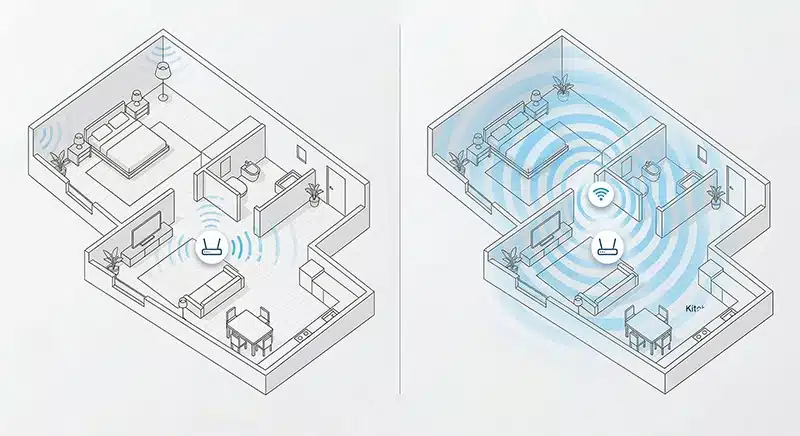
A practical choice for apartments and multi-room homes where walls and longer indoor paths reduce signal stability.
Tag: Multi-room use

Small Offices & Retail Spaces
Useful for front desks, cashier areas, meeting rooms, and compact office layouts that need stable wireless coverage.
Tag: Light commercial

Fast Retrofit Projects
A strong fit for projects that require quick deployment and lower installation cost without structural rewiring.
Tag: Multi-room use
Representative Wireless WiFi Repeater Models
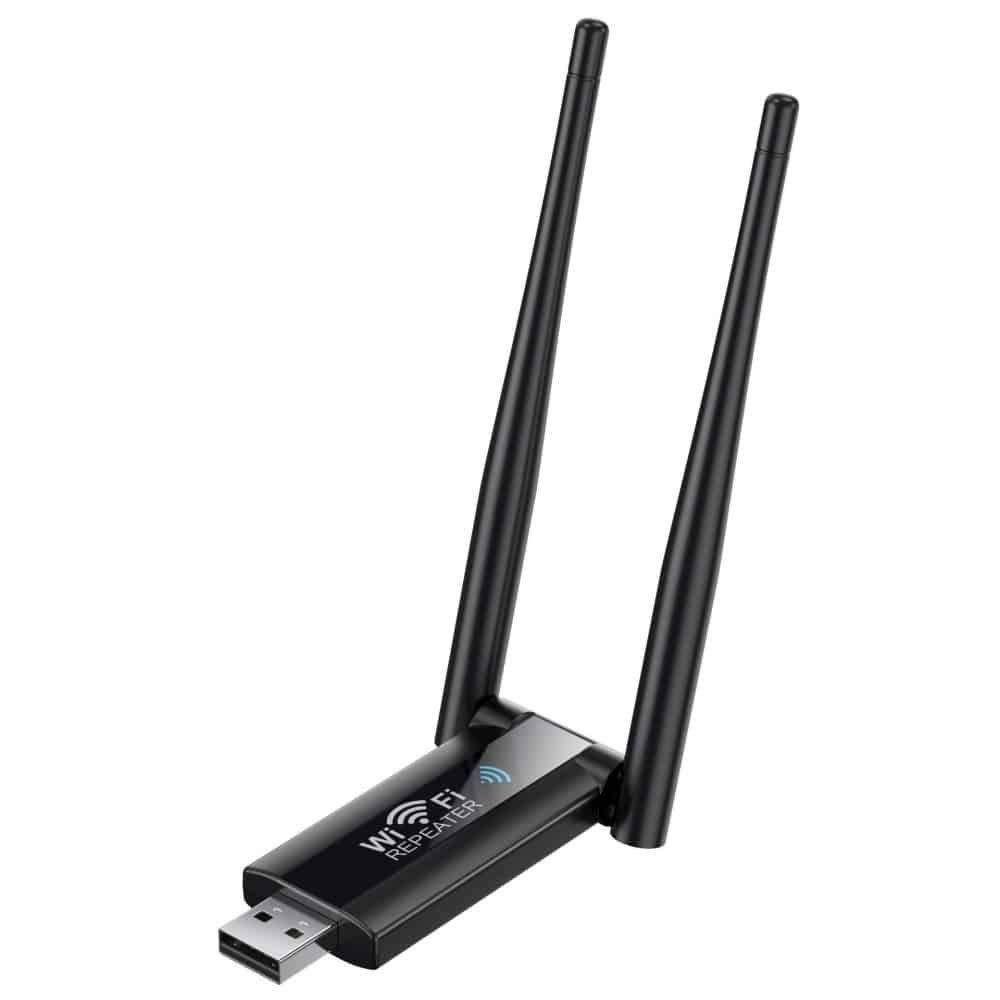
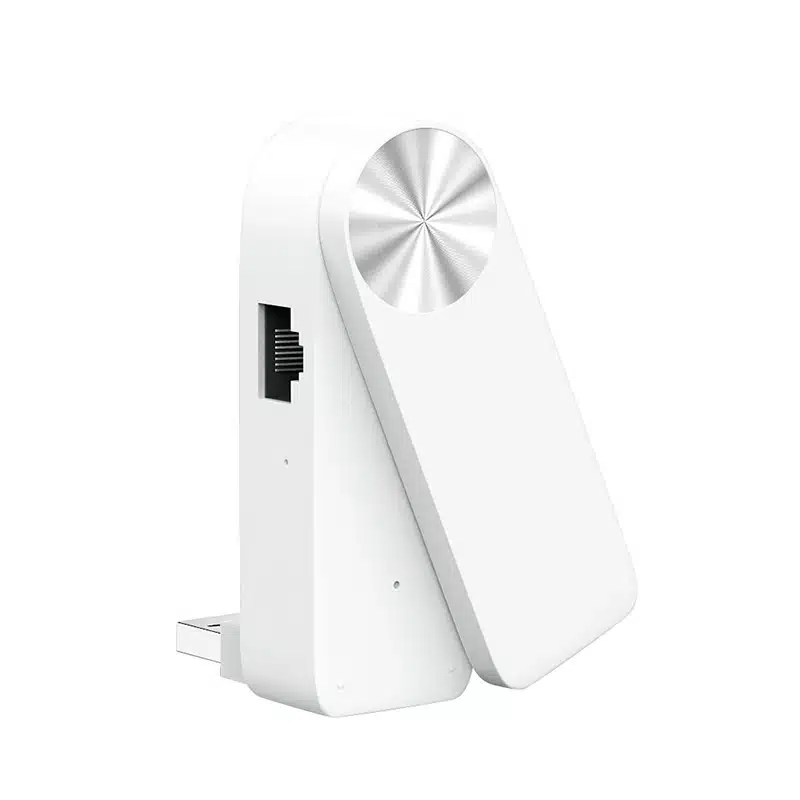
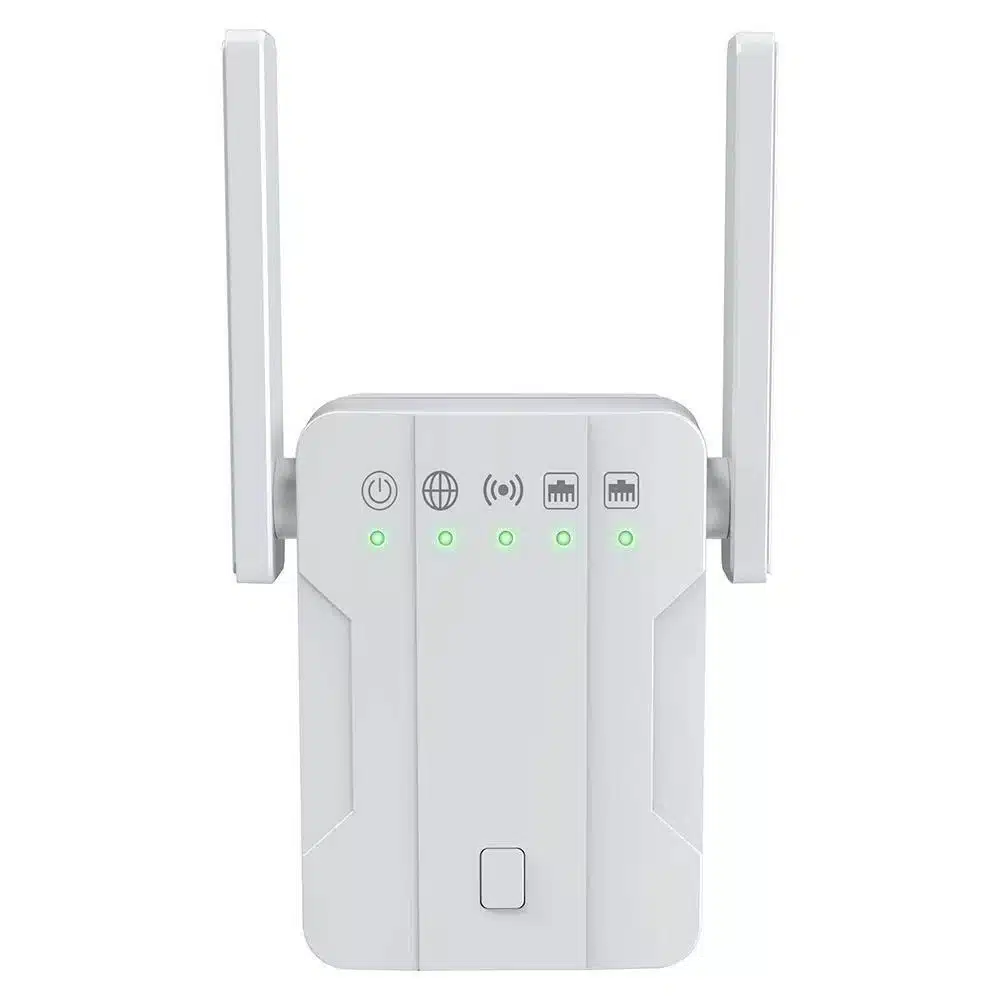
The models below represent common repeater directions within this category, including USB-powered entry models, mainstream dual-band platforms, and WiFi 6 options for upgraded indoor deployment.
Entry Model Wireless-N WiFi Repeaters
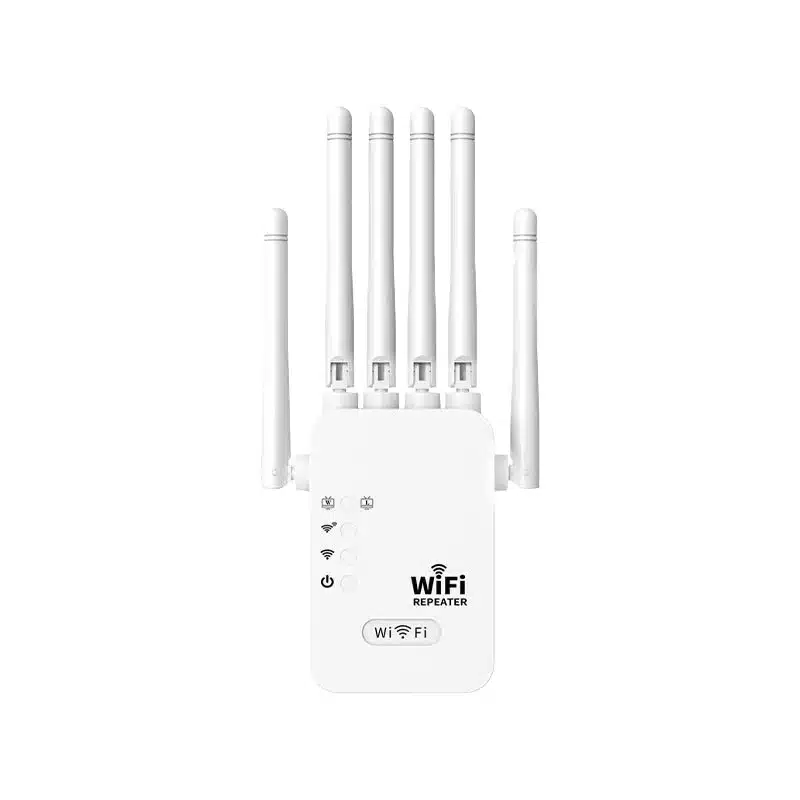
WiFi 5 Repeaters
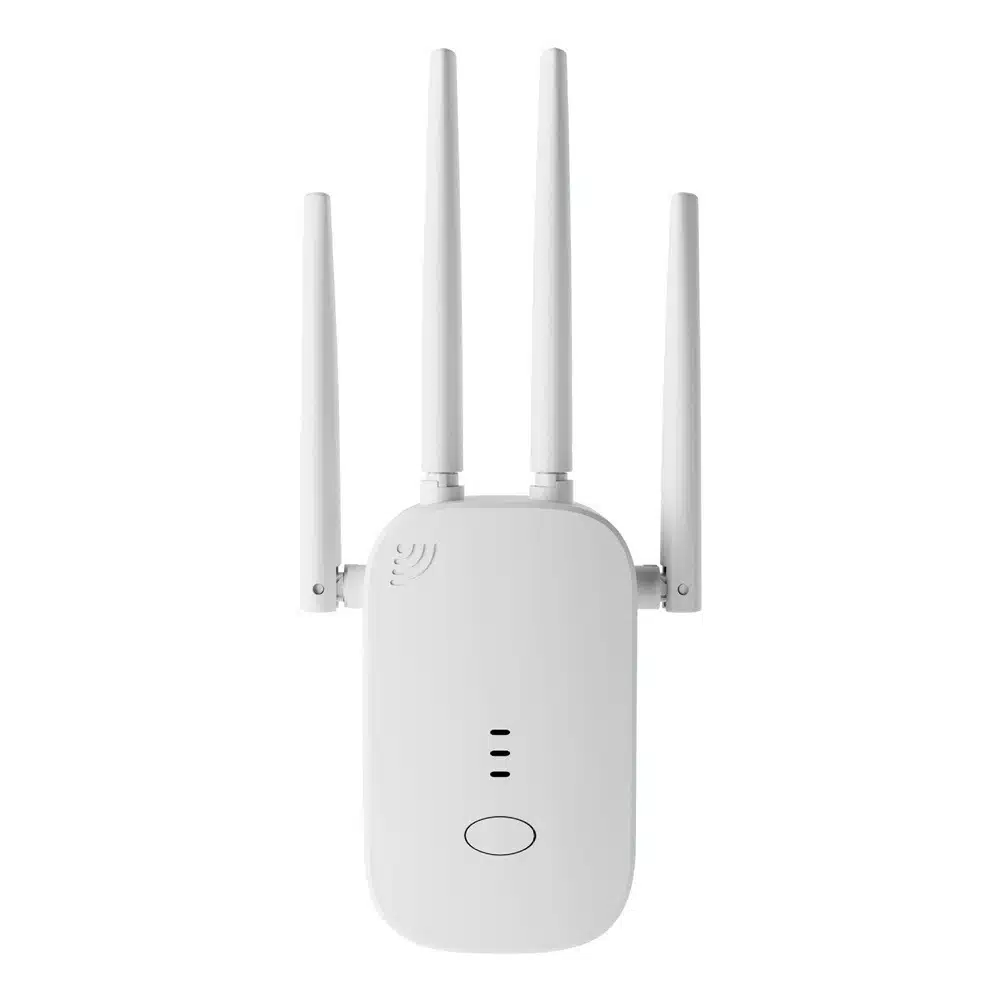
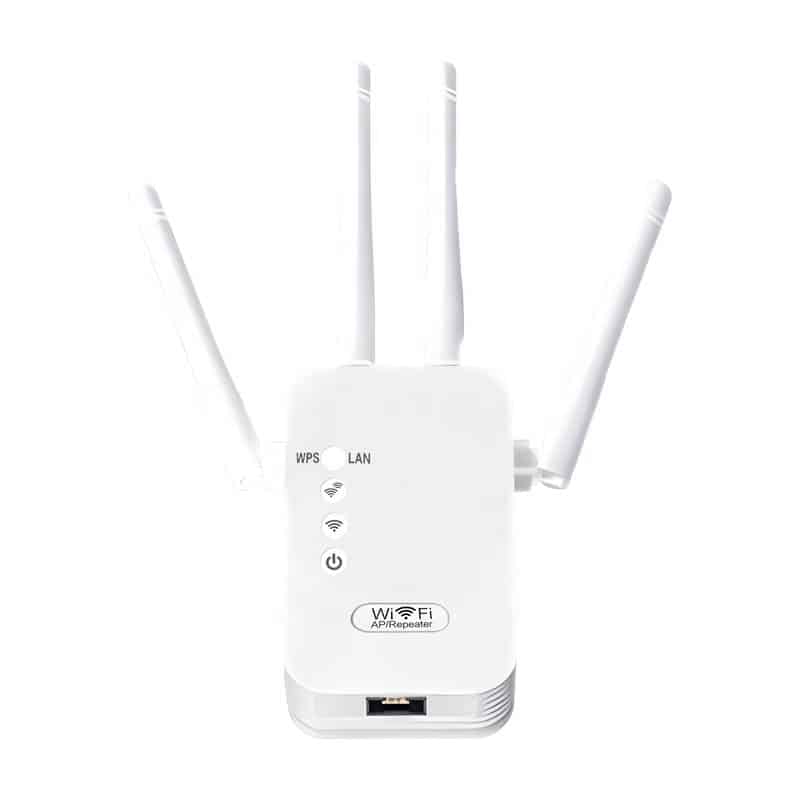
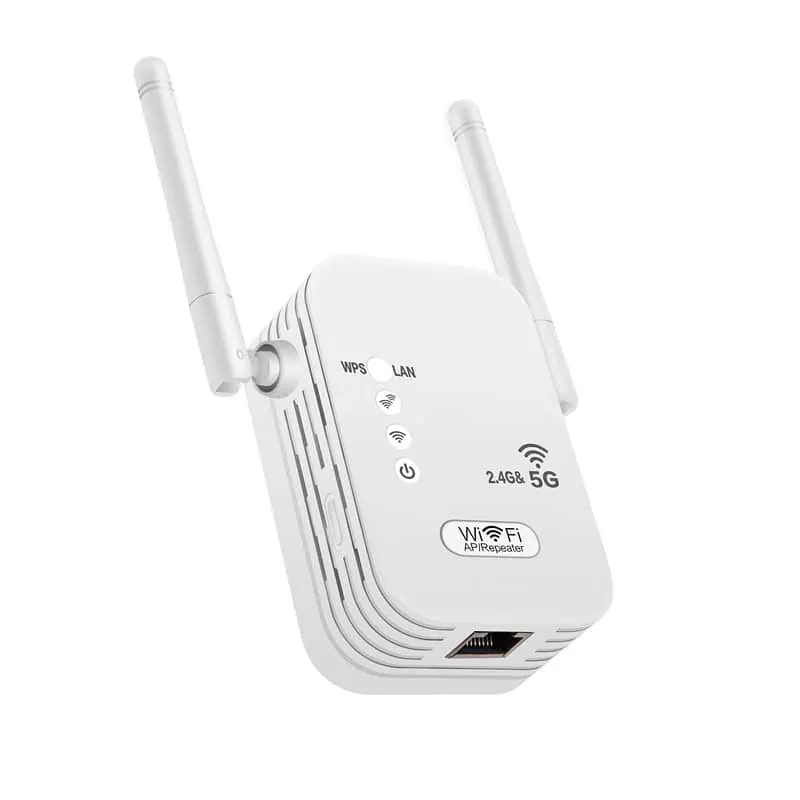
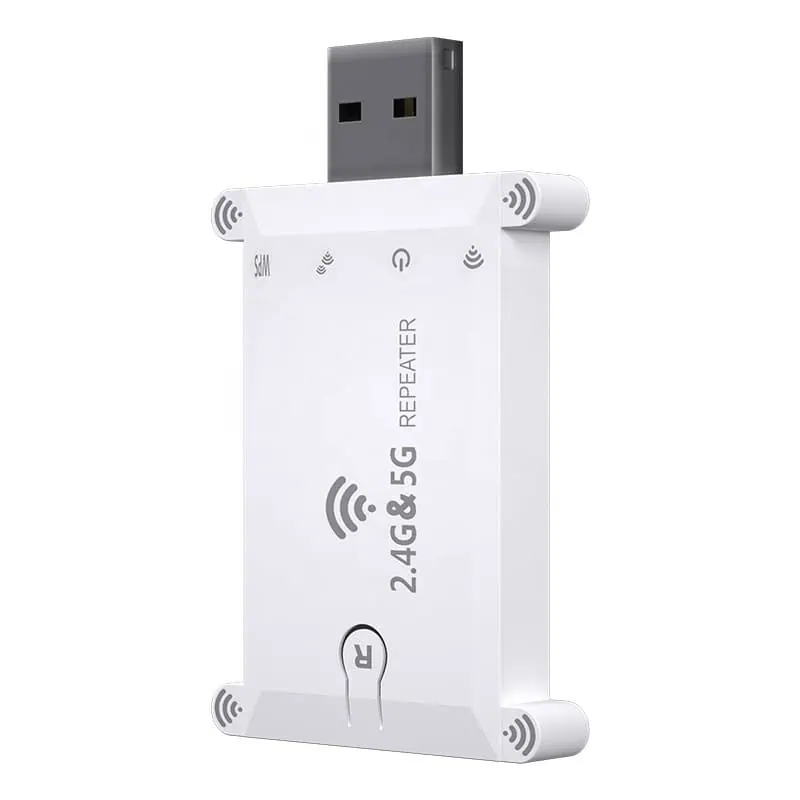
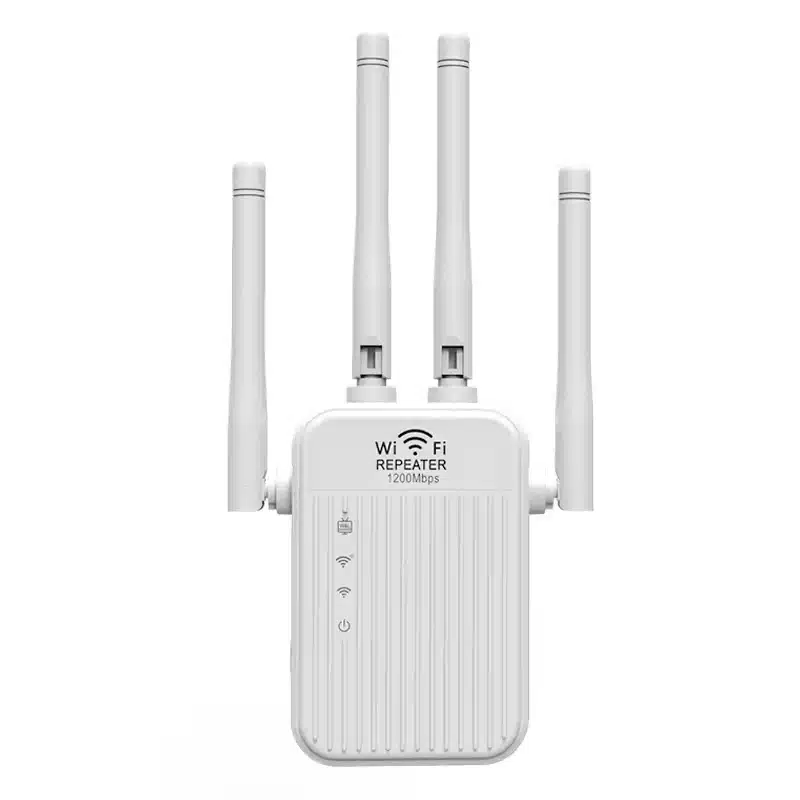
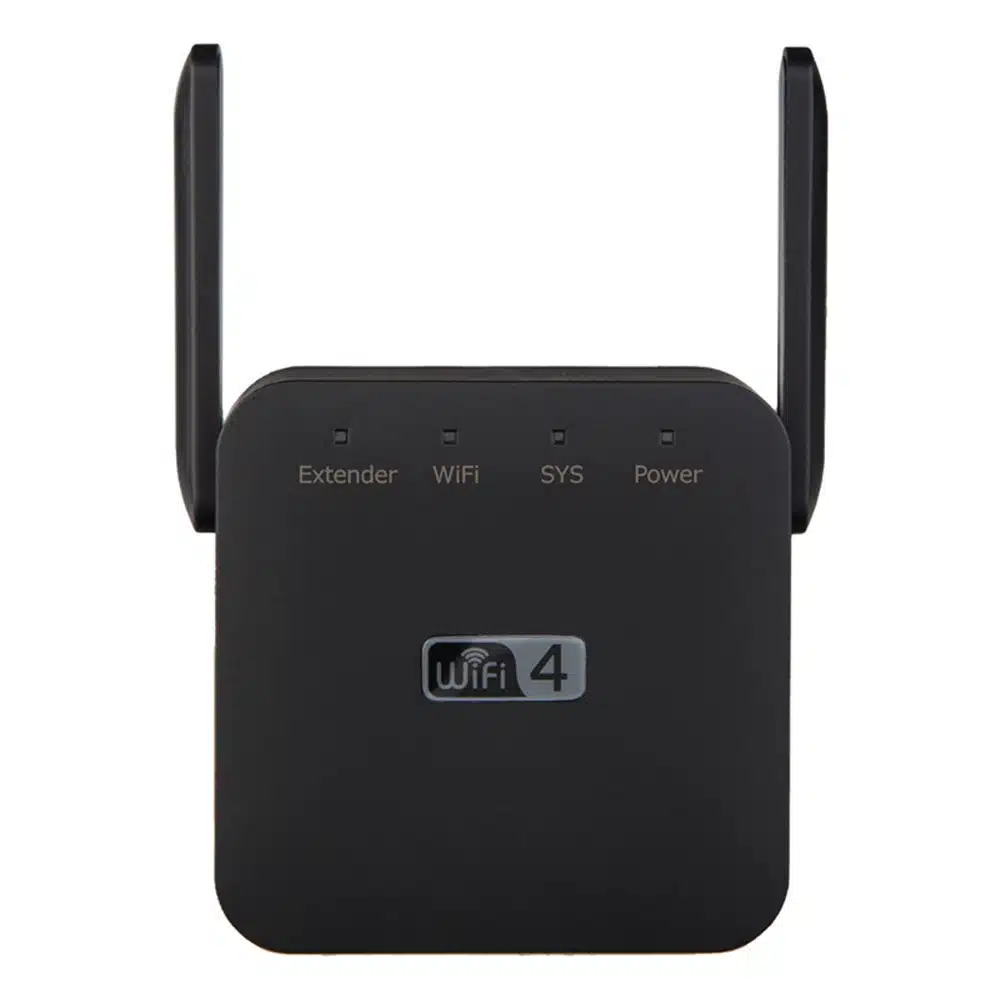
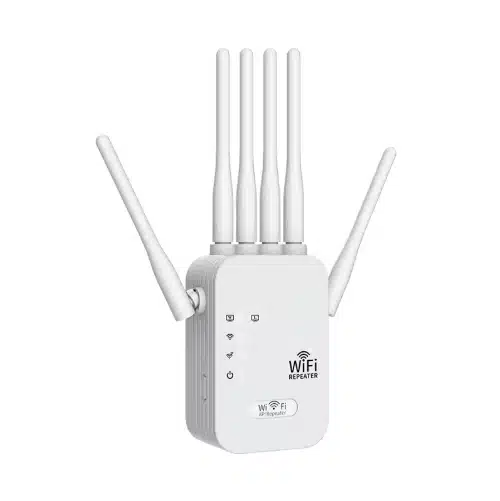
What is a Wireless WiFi Repeater?
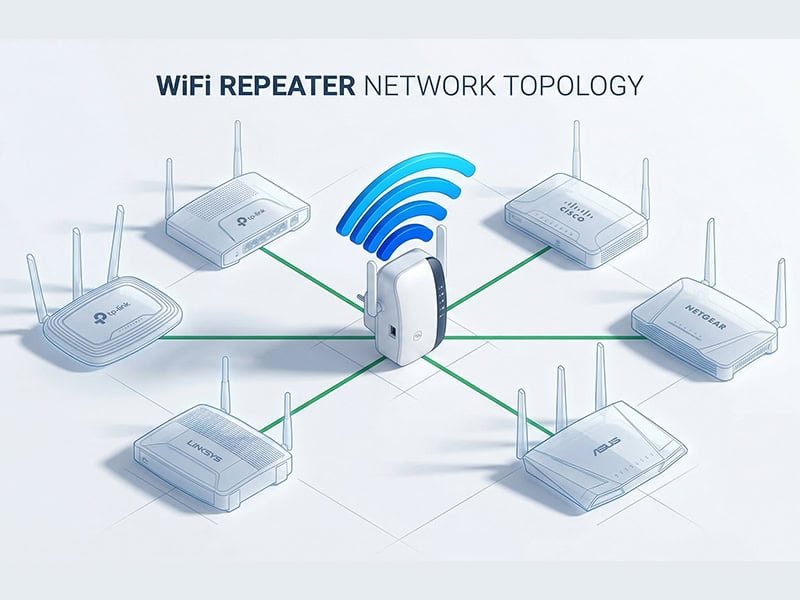
A wireless WiFi repeater receives an existing wireless signal and rebroadcasts it to expand coverage in weak-signal areas without requiring additional Ethernet cabling.
A wireless WiFi repeater receives an existing wireless signal and rebroadcasts it to improve coverage in weak-signal areas without requiring additional Ethernet cabling. It is designed for environments where the main router cannot deliver stable coverage across all rooms or usable areas.
How It Is Typically Used
For B2B buyers, this type of product is widely used in residential networking, small offices, retail stores, RV connectivity, and temporary installations where fast deployment and low installation cost are important. A repeater wireless wifi solution is especially useful when projects require broader coverage but do not justify new cabling or complex infrastructure changes.
Key Technical Factors
From a technical perspective, repeater performance is influenced by chipset stability, antenna design, transmit power, installation distance, wall attenuation, and wireless standard support. In most indoor environments, each wall may reduce usable signal quality by around 15% to 30%, which is why repeaters are usually installed in a mid-point location where the original signal remains stable.
Modern devices in this category may support wireless-n, WiFi 5, WiFi 6, and WiFi 7 standards, with speed options ranging from 300Mbps to 3000Mbps. Depending on model design, antenna configuration, and deployment environment, a wireless wifi extender repeater can help improve signal reach, reduce dead zones, and maintain more consistent connectivity for laptops, smartphones, smart TVs, IP cameras, and IoT devices.

Typical Wireless Repeater Specifications
Coverage Extension: 150–300㎡ indoor
Band Support: 2.4GHz / 5GHz
Speed Options: 300Mbps / 1200Mbps / 3000Mbps
Recommended Placement: 5–15m from main router
Actual performance varies by wall density, interference level, router output power, and installation height.
Cable-Free Expansion
Extend WiFi coverage without adding Ethernet cabling or changing the existing network layout.
Fast Installation
WPS pairing or web-based configuration can be completed in minutes on many mainstream models.
Flexible Deployment
Suitable for homes, offices, RVs, shops, and retrofit projects that require quick wireless coverage expansion.
Key Features of Wireless WiFi Repeaters
Modern wireless WiFi repeaters are built to improve signal coverage, reduce dead zones, and support more flexible deployment across indoor and light commercial environments. The main value of this category lies in fast installation, broad compatibility, and scalable performance levels.
Dual-Band 2.4GHz / 5GHz Support
Supports 2.4GHz for longer coverage and 5GHz for higher throughput, allowing users to balance signal reach and transmission speed based on deployment conditions.
Speed Options from 300Mbps to 3000Mbps
Available in N300, AC1200, AX1800, AX3000 and higher classes, suitable for different router standards and bandwidth requirements in residential and commercial projects.
Internal or External Antenna Configurations
Depending on model design, repeaters may use 2 to 4 antennas with gain options typically ranging from 2dBi to 5dBi, helping improve signal directionality and overall coverage stability.
Quick Installation with WPS Pairing
Many wireless repeater models support one-touch WPS pairing or browser-based setup, allowing installation in less than 2 minutes under standard deployment conditions.
Compatible with Mainstream Routers
Designed to work with routers that follow standard IEEE 802.11 protocols, making them compatible with most mainstream consumer and SMB network brands on the market.
Supports Multiple Connected Devices
Depending on chipset, memory, and wireless standard, models can support approximately 20 to 50 connected devices in typical home or small-office applications.
Actual performance depends on router output power, wall density, interference sources, installation height, and the repeater’s chipset and antenna design.
Why Our Wireless WiFi Repeaters Outperform in Real-World Projects?
Many inexpensive wireless WiFi repeaters perform reasonably well in open spaces; however, once introduced into complex home or office environments, issues such as packet loss, dropped connections, and overheating quickly ensue. We do not prioritize flashy aesthetics; instead, we are relentlessly focused on—and uncompromising about—link stability. The following are four core technical optimizations we have implemented at the hardware level to ensure that every single wireless WiFi repeater can withstand the rigors of continuous, high-load operation—24 hours a day, 7 days a week.

Active 20dBm Signal Amplification for Superior Wall Penetration
Most generic repeater wireless wifi devices rely solely on integrated SoC signals, which often struggle with physical obstacles. Our solution integrates independent External Power Amplifiers (PA) and Low Noise Amplifiers (LNA) to boost transmission power up to 20dBm.
Signal Stability: Maintains a stable RSSI of >-65dBm through 2+ standard concrete walls. (Tested under indoor lab conditions with dual 5dBi antennas and matched router output settings.)
Antenna Grade: Dual 5dBi pure copper high-gain omnidirectional antennas, increasing coverage radius by 40%.
Link Reliability: Packet loss rate remains below 0.3% under 24-hour continuous stress testing.
Universal Protocol Matching & Zero-Drop Handover
The primary cause of B2B returns is incompatibility with ISP gateways. Our wireless wifi extender repeater firmware is built on a customized kernel that has been cross-tested with over 100 global router brands including TP-Link, Netgear, and Huawei. We guarantee a seamless handshake to minimize your after-sales technical support costs.
Cooling: Honeycomb airflow design + Aluminum heat spreaders.
Reliability: Operational in environments up to 45°C without throttling.

Industrial-Grade Thermal Management for 24/7 Stability
Overheating is the leading cause of network drops and hardware failure. Our wireless wifi repeater features an advanced cooling architecture, utilizing 1.5mm dual-sided aluminum heatsinks paired with a honeycomb convection chassis design.
Thermal Performance: Core temperatures are reduced by 15°C compared to standard plastic-only enclosures during full-load operation. (Measured under continuous load at 25°C ambient temperature.)
Service Life (MTBF): Laboratory aging tests confirm a Mean Time Between Failures of over 50,000 hours.
Extreme Environments: Stable operation in ambient temperatures up to 45°C without thermal throttling.
Advanced MU-MIMO Technology for 64+ Concurrent Devices
Built on high-performance MTK/Realtek architectures, our hardware incorporates intelligent QoS (Quality of Service) algorithms. This ensures that the wireless and wifi repeater can manage bandwidth priority dynamically, providing a lag-free experience for high-density environments.
User Capacity: Seamlessly supports up to 64 concurrent terminal devices.
Latency Control: Maintains <20ms latency for 4K streaming and VoIP, even with 32 active connections.
Universal Compatibility: Cross-tested with over 100 global ISP gateways, ensuring a 99.8% compatibility rate.

In the world of wireless networking, there are no shortcuts—only solid engineering and precision tuning. If you are looking for a reliable wireless wifi repeater partner to reduce your return rates and secure your project reputation, we provide the technical foundation you need.
OEM & ODM Wireless WiFi Repeater Solutions
In addition to standard models, we support OEM and ODM cooperation for wireless WiFi repeater projects that require private label, packaging adjustment, plug adaptation, or selected hardware and firmware direction.
Hardware Platform Customization
We support configurable hardware options based on different repeater classes and market positioning, including chipset platform selection, antenna structure, memory capacity, housing color, plug type, and Ethernet port configuration. Common options include Realtek and MediaTek platforms, 2dBi to 5dBi antenna gain, and 8MB / 16MB / 32MB Flash depending on firmware and feature requirements.
Branding, Labeling, and Packaging Support
OEM branding services include logo printing, housing labeling, barcode labels, user manual customization, color box design, and carton marking. For standard private-label projects, logo-based OEM usually starts from 500 units, while customized packaging artwork can typically be prepared within 5 to 7 working days after design confirmation.
Production Capacity and Delivery Control
For recurring orders and distribution projects, we provide stable manufacturing planning with typical monthly capacity in the range of 50,000 to 100,000 units, depending on model complexity and production schedule. Standard lead time for repeat models is generally 15 to 25 days, while new custom projects require additional time for sample validation, firmware confirmation, and packaging approval.


OEM / ODM Capability Snapshot
-
MOQ for logo OEM: 500 units
-
Packaging artwork lead time: 5–7 working days
-
Standard production lead time: 15–25 days
-
Monthly capacity: 50,000–100,000 units
-
UI language support: 10+ to 20+ languages
-
Plug types: EU / US / UK / AU
Customization scope may vary depending on chipset platform, tooling status, firmware structure, and order quantity.
Talk with our team about chipset options, language support, branding, and project lead time.
Typical OEM / ODM Project Flow
Requirement Confirmation
Sample and Artwork Review
Firmware / Packaging Approval
Mass Production and Shipment
FAQs About Wireless WiFi Repeaters
Use this section to answer common questions about wireless WiFi repeaters, including signal range, speed loss, router compatibility, installation position, and OEM / ODM customization options for different projects.
What is a wireless WiFi repeater best used for?
It is best used for general indoor coverage expansion where the original router signal is not strong enough to cover all rooms or usable areas consistently.
Is a wireless repeater better than a model with Ethernet port?
Not always. A standard wireless repeater is suitable for cable-free expansion, while a model with Ethernet port is better when wired endpoint access is also required.
Are wireless WiFi repeaters suitable for offices as well as homes?
Yes. They are commonly used in homes, small offices, shops, and similar indoor environments where practical wireless extension is needed without major infrastructure changes.
Is dual-band necessary for most projects?
Dual-band models are usually a better fit for mainstream residential and small-office demand because they provide a more balanced combination of signal reach and usable throughput.
Can one wireless repeater support OEM branding?
Yes. Depending on model platform and project scope, OEM support may include branding, packaging, plug type, and selected firmware direction.
How should buyers choose between N300, AC1200, and WiFi 6 models?
The choice depends on router generation, target market positioning, bandwidth demand, and expected device density. Entry-level projects may prefer lower-cost N-class models, while mainstream and upgraded projects usually favor AC or AX platforms.
Are wireless WiFi repeaters compatible with all routers?
Most wireless repeaters are designed to work with routers that support standard IEEE 802.11 wireless protocols, including 802.11n, 802.11ac, and 802.11ax depending on model class. In practice, compatibility with mainstream consumer and SMB routers is generally very broad, but final performance still depends on band support, encryption settings, and firmware matching.
What OEM / ODM options are available for wireless WiFi repeaters?
For OEM / ODM projects, customization may include logo printing, packaging design, user manual branding, plug type selection, default SSID naming, web UI customization, multi-language support, and selected hardware or firmware adjustments. Common private-label OEM projects often start from 500 units, while the exact customization scope depends on chipset platform, tooling status, and order quantity.
Find the Right WiFi Solution for Your Needs
Explore by Product Type
👉 Compare different WiFi expansion solutions based on performance and usage.
Explore by WiFi Standard
👉 Choose based on speed, performance, and compatibility.
Explore by Application Scenario
👉 Find the best solution for your specific environment.
Explore by Installation Type
👉 Please make your selection based on the wireless repeater’s interface and installation method.
Contact Us
Please fill out the form below, and our professional consultants will assist you as soon as possible, typically within 24 hours.
Contact Information
Phone: +86-13923714138
WhatsApp: +8613923714138
Email: addway.wang@igrentech.cn
Address: Room 301, Building A2, Qiangrong East Industrial Zone, No. 723 Zhoushi Road, Hangcheng Street, Shenzhen, Guangdong, China