Outdoor WiFi Repeaters
Built for outdoor signal extension where indoor repeaters are not enough — including yard coverage, gate-side deployment, parking lots, farm areas, warehouse edges, and remote installation points.
-
Outdoor-ready structure
Built for deployment where indoor-only devices are not suitable.
-
Flexible installation fit
More suitable for pole and wall mounting in open outdoor areas.
-
Project-friendly deployment
Better aligned with PoE-based installation and remote coverage expansion.
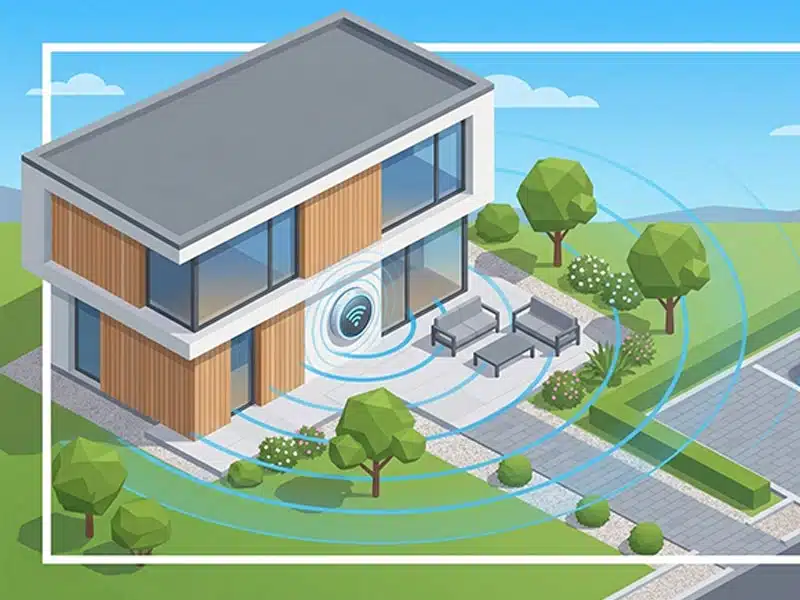
Why Outdoor-Specific WiFi Repeaters Matter
Outdoor deployment requires more than coverage extension. It also demands weather-oriented enclosure design, wider operating tolerance, and installation methods that fit open and exposed environments.
What standard indoor repeaters are not built for
Weather exposure
Not for rain, dust, and open-air use
Wide temperature swings
Outdoor sites face wider heat and cold variation
Mounting limitation
Indoor placement does not fit pole or wall deployment
Power access
Outdoor points may not have nearby AC outlets
What outdoor-class repeaters are expected to support
Ingress protection
Commonly targets IP65 or IP67 housings
Wider operating range
Built for more exposed environments
Outdoor mounting fit
Wall and pole mounting are common
PoE-friendly deployment
Better for remote outdoor installation
IP code is standardized
IEC defines the IP protection system
Outdoor temperature specs are public
Some models publish -30°C to 70°C ranges
Outdoor installation is different
Outdoor hardware often supports pole mounting
PoE is a practical outdoor feature
Remote points often need PoE-friendly power
Once outdoor-grade requirements are clear, the next step is choosing the right deployment type: omnidirectional coverage, directional extension, or bridge-style outdoor links.
Common Outdoor WiFi Repeater Types for Different Deployments
The right outdoor repeater type depends on whether your site needs local coverage, focused extension, or point-to-point connectivity.
Omnidirectional Outdoor Repeater
Best for: Yard / Campus Edge / Open Service Area
-
Better for multi-direction user access
-
More suitable for local-area outdoor coverage
Directional Outdoor Repeater
Best for: Gate / Perimeter / Roadside
-
Better signal concentration in one direction
-
Helps reduce wasted side coverage
Bridge-Style Outdoor Repeater
Best for: Building Link / Gatehouse / Remote Camera Point
-
Better for fixed-point wireless links
-
Some official bridge kits publish up to 1 km or 5 km under deployment conditions
Mesh-Capable Outdoor Node
Best for: Campus / Resort / Mixed Indoor-Outdoor
-
Better for expansion and roaming architecture
-
More suitable for controller-based deployments
Quick Selection Guide
| Type | Best for | Not ideal for |
|---|---|---|
| Omnidirectional | Broad local-area outdoor access | Very long fixed-point links |
| Directional | Focused zone coverage | 360° general access |
| Bridge-Style | Building-to-building or remote point links | Broad local user coverage |
| Mesh-Capable | Expandable outdoor networks | Simple one-off fixed bridge links |
Technical Snapshot Buyers Actually Check
For outdoor WiFi repeater projects, buyers usually check enclosure protection, operating range, mounting method, power design, and deployment fit before headline speed numbers.
| Technical Item | What buyers should look for | Why it matters |
|---|---|---|
| Protection Rating | IP65 / IP67 | Outdoor products commonly publish IP65 or IP67 ratings based on IEC IP code rules, which gives buyers a clearer enclosure benchmark than generic “weatherproof” wording. |
| Operating Temperature | Wide published operating range | Mainstream outdoor WiFi products often publish ranges such as -30°C to 70°C for harsher environments. |
| Mounting Method | Wall / pole mounting | Outdoor deployment often happens on perimeter walls, poles, or exposed edges rather than room-based placement. |
| Power Input | PoE / Passive PoE / 802.3af/at | PoE-friendly installation is often more practical outdoors, especially where local AC outlets are not nearby. Standard Ethernet runs are commonly specified up to 100 m. |
| Wireless Band / Speed Class | 2.4 GHz / 5 GHz / dual-band / WiFi 5 or WiFi 6 class | Band and speed class affect throughput, client mix, and interference handling; vendor outdoor product pages commonly present these as key comparison fields. |
| Coverage Pattern | Omnidirectional / directional / bridge-style | The right pattern depends on whether the project needs broad local access, focused extension, or fixed-point links. |
| Management Method | Web / app / controller / cloud | Controller or cloud-friendly management matters more in multi-device or project deployments than in one-off consumer-style installs. |
| Deployment Fit | Yard / gate / parking / farm / bridge / remote point | A product that matches the deployment type usually matters more than a bigger headline speed number. |
IP rating is standardized
IEC 60529 defines how enclosure protection against dust and liquids is classified.
Outdoor temperature ranges are public specs
Outdoor WiFi product pages commonly publish ranges such as -30°C to 70°C.
PoE changes installation practicality
PoE simplifies outdoor installation where power outlets are not close to the device location, and Ethernet runs are commonly specified up to 100 m.
Management matters in projects
Outdoor product families often highlight controller or cloud-based management because multi-device projects need easier maintenance.
Where Outdoor WiFi Repeaters Make More Sense
Lorem ipsum dolor sit amet, consectetur adipiscing elit. Ut elit tellus, luctus nec ullamcorper mattis, pulvinar dapibus leo.
Farm & Rural Yard
Better for open-area coverage beyond indoor wall reach.
Gate & Entrance
Better for exposed access points and perimeter-side deployment.
Parking & Outdoor Service Areas
Better for broader user access outside building interiors.
Warehouse Yard & Factory Edge
Better for side lanes, loading zones, and outdoor operational areas.
Campus & Resort Spaces
Better for mixed indoor-outdoor user coverage between buildings.
Remote Camera & Building Edge
Better for remote outdoor points and fixed extension zones.
Open space ≠ bridge
Broad local coverage and fixed-point links are different goals.
Higher power ≠ better total coverage
Mounting, obstacles, and client capability also matter.
Outdoor fit matters as much as speed
Enclosure, mounting, and power design often matter first.
Regional rules still apply
Band availability and outdoor use conditions vary by market.
Outdoor vs Indoor / Omni vs Directional
Before comparing models, buyers usually need to answer two questions: Outdoor or indoor? Omnidirectional or directional?
Outdoor vs Indoor
Choose outdoor-grade hardware when the installation point is exposed, harder to power, or beyond the practical reach of indoor-only placement.
| Item | Outdoor | Indoor |
|---|---|---|
| Best fit | Yard, gate, parking, perimeter | Rooms, offices, apartments |
| Enclosure | Better for exposed deployment | Better for protected spaces |
| Mounting | Wall / pole / edge installation | Room-based placement |
| Power | More PoE-oriented | More plug-in oriented |
| Priority | Outdoor fit | Indoor convenience |
Better when the installation point is exposed or harder to power.
Omni vs Directional
Choose by coverage pattern, not by whichever sounds more powerful.
| Item | Omnidirectional | Directional |
|---|---|---|
| Coverage | Around the device | Toward one direction |
| Best fit | Yard, courtyard, open area | Gate, roadside, perimeter |
| User pattern | Multi-direction access | Focused target area |
| Main value | Broader local coverage | Better signal focus |
| Not ideal for | Long fixed links | 360° local access |
Choose by coverage pattern, not by whichever sounds stronger.
-
Outdoor = environment requirement
-
Omni / directional = coverage requirement
-
These are different buying decisions, not competing labels.
OEM / ODM Evidence for Outdoor WiFi Repeater Projects
Useful outdoor OEM / ODM work usually goes beyond branding and extends into enclosure, antenna, mounting, power, firmware, and compliance-related details.
Enclosure & Protection
IP target, shell structure, cable outlet, mounting bracket
Outdoor protection claims such as IP65 / IP67 should match IEC IP code logic and actual enclosure design.
Antenna & Coverage
Omni / directional / connector / gain option
Coverage pattern and antenna direction often matter more than appearance in outdoor deployment planning.
Power & Installation
PoE, DC input, adapter region, wall/pole fit
Outdoor projects often depend on installation and power method as much as wireless speed.
Firmware & UI
AP / repeater / router / bridge / branding logic
Software mode, setup flow, and UI naming are common ODM layers; EU radio equipment also sits under the RED framework.
Labeling & Packaging
Logo, carton, manual, SKU label, regional output
FCC-regulated RF devices have authorization, labeling, and marketing requirements before U.S. sale or import.
Compliance Alignment
FCC / RED / EMC / IP claim planning
Major RF, antenna, enclosure, power, or software changes may affect validation scope.
Customization Scope at a Glance
| Scope | Typical OEM level | Typical ODM level |
|---|---|---|
| Branding | Logo, carton, manual, label | Same + UI naming |
| Enclosure | Color, shell marking, bracket details | New shell direction, sealing-related structure |
| Antenna | Connector or antenna option matching | Coverage pattern and RF architecture discussion |
| Power | Adapter region, injector pairing | PoE / DC path adjustment discussion |
| Firmware | Default branding, setup naming | Mode logic, UI flow, feature fit |
| Compliance | Label/output alignment | Revalidation may be needed if major hardware/RF changes occur |
Buyer Notes
- Logo-only customization is not the same as ODM.
- Antenna, RF, enclosure sealing, and software changes may affect validation scope.
- Outdoor claims should match actual enclosure and deployment design.
- Market-specific compliance planning should be considered early for U.S. and EU projects.
Need a reliable Outdoor WiFi repeater OEM / ODM partner?
Talk to our team about firmware, housing, interface, and packaging customization.
Home WiFi Repeater FAQ
These questions cover the most common concerns around indoor deployment, product tier selection, and OEM planning for home WiFi repeater programs.
1. What is the difference between an outdoor WiFi repeater and an indoor repeater?
An outdoor WiFi repeater is selected for exposed deployment conditions, not just for signal extension. Buyers usually compare enclosure protection, operating range, mounting method, and power design first, because outdoor-class products commonly publish IP ratings such as IP65 or IP67 and wider temperature ranges than indoor-only devices.
2. What does “omni” mean in outdoor WiFi products?
“Omni” means omnidirectional coverage. In practical terms, it is used when client devices need to connect from multiple directions around the installation point, while directional products are chosen when coverage should be focused toward a target area instead of spread broadly around the device.
3. Is an outdoor WiFi repeater the same as an outdoor access point?
Not always. Some outdoor platforms support multiple operating modes such as AP, repeater, bridge, or controller-managed deployment, but others are designed primarily for one role. That is why buyers should verify the operating mode and deployment logic on the exact model page instead of assuming all outdoor WiFi devices serve the same purpose.
4. Does outdoor use always mean longer range?
No. Outdoor use usually means the product is more suitable for exposed installation, but actual range still depends on antenna pattern, mounting height, line of sight, interference, and client capability. Public bridge products sometimes publish figures such as up to 1 km or up to 5 km, but those claims are tied to specific deployment conditions and should not be generalized to all outdoor repeater scenarios.
5. What IP rating is usually expected for outdoor deployment?
IP65 and IP67 are the most common shorthand buyers look for, because IEC 60529 defines the IP code used to classify enclosure protection against dust and liquids. In practice, the rating should be treated as a test-based enclosure claim, not just a marketing word like “weatherproof.”
6. Is PoE important for outdoor WiFi repeaters?
In many outdoor projects, yes. PoE is often preferred because installation points such as poles, gate areas, building edges, or yard-side walls may not have a nearby AC outlet, and standard Ethernet runs are commonly planned around 100 m practice. Public outdoor bridge and outdoor AP product pages also frequently list Passive PoE or PoE+ as key deployment features.
7. When should I choose omni, directional, or bridge-style outdoor products?
Choose omni when coverage is needed around the device, directional when traffic is mainly concentrated in one direction, and bridge-style products when the goal is to connect separated fixed points such as a main building and a remote point. Ubiquiti and TP-Link publicly separate outdoor coverage products from PtP bridge products, which reflects this same real-world buying logic.
8. Can outdoor WiFi repeaters be customized for OEM / ODM projects?
Usually yes, but the useful customization scope is broader than logo printing. Buyers often ask about enclosure structure, antenna direction, PoE or DC input, firmware mode, UI branding, packaging, and region-specific compliance alignment; changes to RF, antenna path, enclosure sealing, or software behavior can also affect certification scope in markets such as the U.S. and EU.
9. Do outdoor WiFi products need different compliance planning for different markets?
Yes. In the U.S., RF devices are subject to FCC equipment authorization and related importation, labeling, and marketing rules; in the EU, radio equipment is regulated under the RED framework. That means outdoor OEM / ODM projects should consider market destination early, especially when hardware, antenna, or software-related changes are involved.
10. Should I compare outdoor models mainly by speed?
Not on a category page. Speed class matters, but for outdoor deployment buyers usually get better results by checking enclosure protection, mounting method, power architecture, coverage pattern, management method, and deployment fit before comparing headline Mbps numbers. Public outdoor product pages commonly present IP rating, operating range, PoE, and management as core comparison fields alongside wireless speed.
Find the Right WiFi Solution for Your Needs
Explore by Product Type
-
Wireless WiFi Repeater
-
WiFi Range Extenders
-
WiFi Signal Boosters
👉 Compare different WiFi expansion solutions based on performance and usage.
Explore by WiFi Standard
-
Wireless-N WiFi Repeaters
-
WiFi 5 Repeaters
-
WiFi 6 Repeaters
-
WiFi 7 Repeaters
👉 Choose based on speed, performance, and compatibility.
Explore by Application Scenario
-
Home WiFi Repeaters
-
Outdoor WiFi Repeaters
-
Long Range WiFi Repeaters
-
Camper WiFi Repeaters
👉 Find the best solution for your specific environment.
Explore by Installation Type
-
WiFi Repeater with Ethernet Port
-
Plug WiFi Repeater
-
WPS WiFi Repeaters
-
External Antenna Repeaters
👉 Please make your selection based on the wireless repeater’s interface and installation method.
Contact Us
Please fill out the form below, and our professional consultants will assist you as soon as possible, typically within 24 hours.
Contact Information
Phone: +86-13923714138
WhatsApp: +8613923714138
Email: addway.wang@igrentech.cn
Address: Room 301, Building A2, Qiangrong East Industrial Zone, No. 723 Zhoushi Road, Hangcheng Street, Shenzhen, Guangdong, China