OEM / ODM WiFi Repeaters for Private Label and Product Development
We support both fast OEM private-label programs and deeper ODM repeater development for brands, distributors, telecom projects, and market-specific wireless products.
Our OEM / ODM WiFi repeater service is designed for B2B buyers who need more than a standard off-the-shelf product. Some projects only require fast private-label execution, while others need deeper support in platform selection, firmware adaptation, housing changes, or market-specific product definition.
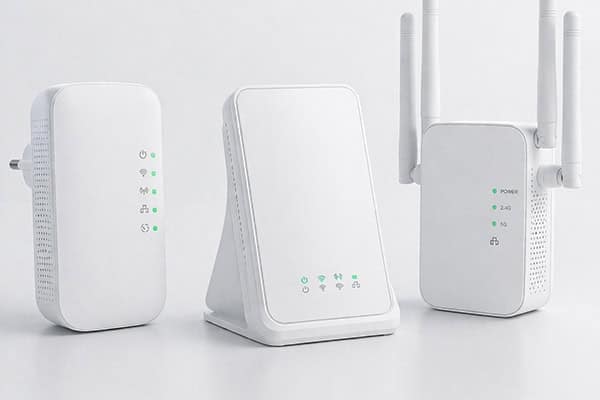
OEM vs ODM WiFi Repeaters: What’s the Difference?
Both OEM and ODM repeater projects can start from existing hardware platforms, but they serve different business goals. The right model depends on how much customization, technical involvement, and product differentiation your project needs.
OEM
OEM WiFi repeater projects are usually a better fit for buyers who already have a clear product direction and mainly need private label support, packaging changes, UI branding, manuals, labels, or selected firmware and hardware adjustments.
ODM
ODM WiFi repeater projects are usually a better fit for buyers who need deeper support in platform recommendation, feature definition, housing modification, interface redesign, firmware adaptation, or more differentiated market positioning.
In many repeater projects, OEM is the faster path to market, while ODM becomes more valuable when stronger technical differentiation or project-specific development is required.
OEM WiFi Repeaters Means Platform Selection First, Branding Second
A strong OEM repeater project is usually defined by platform fit, interoperability, security, and deployment requirements before cosmetic customization starts.
Interoperability
Wi‑Fi Alliance certification shows repeaters, extenders, and mesh systems are treated as distinct product classes, ensuring multi-vendor compatibility.
Source / Reference: Wi‑Fi CERTIFIED — Repeater, Extender, Mesh System (opens in new tab)
Security
WPA3 and Protected Management Frames (PMF) provide stronger security for B2B deployment; certification records confirm real implementations.
Source / Reference: WPA3 Certification Record (opens in new tab)
Management
TR‑069 defines secure CPE auto-configuration with ACS; TR‑181 defines device data model for Wi-Fi repeaters, enabling remote monitoring, diagnostics, and firmware updates.
Source / Reference:
- TR-069 Official Specification PDF (opens in new tab)
- TR-181 Device Data Model PDF (opens in new tab)
This is why B2B OEM buyers usually evaluate chipset level, firmware roadmap, security profile, and certification readiness before deciding branding details.
Choose the OEM Platform by Deployment Target
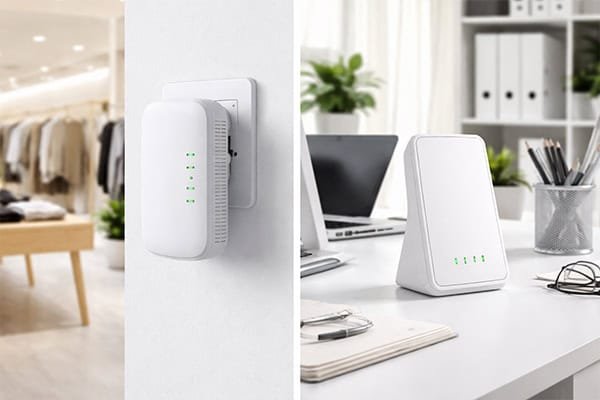
The right OEM platform depends on deployment type, coverage needs, Wi‑Fi generation, certification, and management capabilities.
| Deployment Target | Recommended Platform | Why it Fits | CTA / Subpage |
|---|---|---|---|
| Entry Retail | Single-band or entry dual-band repeater | Low BOM, fast sell-through, cost-sensitive | Entry-Level Repeaters |
| Mainstream Retail | Dual-band AC/AX repeater | Balanced cost & coverage | Dual Band Repeaters |
| ISP Bundle | EasyMesh-ready repeater | Multi-vendor compatibility; centralized rollout | EasyMesh Repeaters |
| SMB / Hospitality | Dual-band Wi-Fi 6 + WPA3 | High client density; stronger security | WiFi 6 Repeaters |
| Regional Branded Project | Custom housing + firmware + compliance | Differentiation; local market fit | OEM / ODM Service |
Technical Evidence Snapshot
Features and standards per OEM platform, verified by official certifications.
| Item | Platform | Wi-Fi Generation | Band Support | Channel Width | Security | Management / Compliance |
|---|---|---|---|---|---|---|
| Wi-Fi Generation | All platforms | 802.11n / ac / ax | 2.4 / 5 GHz | 20/40/80 MHz | WPA2 / WPA3 | TR-069 / TR-181 support |
| Mesh Capability | EasyMesh-ready platforms | N/A | 2.4 / 5 GHz | 20/40/80 MHz | WPA3 | Certified EasyMesh |
| Antennas | Desktop / high-end | 2×2 / 4×4 MIMO | 2.4 / 5 GHz | 20–80 MHz | WPA3 | TR-069 optional |
| Throughput indicator | Platform spec | Up to 1.8 Gbps (certified width + MCS) | 2.4 / 5 GHz | 20/40/80 MHz | WPA3 | PMF enabled |
| Remote Management | All platforms | N/A | 2.4 / 5 GHz | 20–80 MHz | WPA3 | TR-069 / TR-181 ready |
Explore Platform Details
OEM vs Private Label vs Standard Repeater
OEM projects go beyond branding: they include platform selection, firmware customization, packaging, and compliance planning.
Standard Catalog Product

-
Fast sourcing
-
Standard hardware
-
Standard firmware
-
Standard packaging
-
Low differentiation
Private Label Repeater

-
Logo & carton branding
-
Limited firmware tweaks
-
Quick visual customization
-
Limited regional compliance
-
Moderate differentiation
OEM Repeater Project

-
Platform selection
-
Firmware customization
-
Packaging & labeling
-
Full regional compliance
-
High differentiation & enterprise-ready
OEM / ODM Repeater Product Families
Choose the product family first, then go deeper into platform details, enclosure style, firmware direction, and market fit.

By Product Type
Start with the core product format if your buyers compare repeater structures before checking standards or installation details.

By Standard
Use this path if your target market filters products by Wi-Fi generation, platform age, and expected positioning.

By Scenario
Choose by deployment environment when the sales focus depends on coverage conditions, outdoor exposure, or mobility use cases.

By Installation
Use this path when installation style, port structure, setup method, or enclosure layout matters more than wireless generation.
OEM / ODM Repeater Program Evidence
OEM supports brand-ready delivery on existing platforms. ODM supports deeper product-definition work for more customized repeater programs.
Hardware & PCBA Engineering
Built for buyers who need more than a standard public-board solution.
-
100% in-house hardware development
-
MediaTek / Realtek platform integration
-
Custom ports, power, and PCB layout support
Firmware & Software Support
Suitable for projects that need branded UI, protocol features, or secondary development.
-
OpenWrt-based customization
-
TR-069 / TR-181 integration
-
Multi-language UI and white-label web panel
Rapid Tooling & ID Design
Designed for projects that need private mold, modified housing, or faster sample validation.
-
T0 sample in 25 days
-
In-house tooling and mold-flow review
-
Custom material, finish, and logo options
Testing & Quality Control
Used to support more stable wireless performance and lower production risk.
-
In-house 3D OTA chamber
-
LitePoint IQxel calibration
-
Burn-in test from -20°C to 60°C
Production Capacity
Suitable for repeat orders, peak-season supply, and distributor-level programs.
-
8 automated Fuji SMT lines
-
30,000 units/day peak capacity
-
10,000 m² smart manufacturing facility
Lead Time & Supply Chain
Built for faster rollout when the project uses mature repeater platforms.
-
35–45 days for mature PCBA orders
-
Strategic chipset supply support
-
Better fit for scalable B2B programs
Typical OEM / ODM Scope
| OEM / ODM Item | Typical Support | What Buyer Can Confirm |
|---|---|---|
| Logo / branding | Yes | Device logo, label, carton artwork |
| Plug localization | Yes | EU / US / UK / AU plug options |
| Packaging customization | Yes | Gift box, carton mark, manual layout |
| Web UI / app branding | Project-based | UI screenshot or branding sample |
| Firmware feature adjustment | Project-based | Function list confirmation |
| Memory / flash configuration | Project-based | BOM / spec confirmation |
| Certification support | Project-based | Compliance file path by market |
| Sample validation | Yes | Pre-production sample review |
| Pilot run / trial order | Project-based | Trial quantity discussion |
| Mass production release | Yes | QC checkpoints after approval |
Note: OEM / ODM scope for WiFi repeater projects depends on chipset platform, firmware path, compliance requirements, MOQ, and target market. Not every customization item applies equally to every project.
Need deeper product-definition support beyond platform-based OEM?
Talk to our team about firmware, housing, interface, and packaging customization.
Who This Page Is For
Not every WiFi repeater buyer needs the same level of customization. Some projects focus on fast private-label supply, while others require deeper product definition, firmware adaptation, or housing development. This page is designed for B2B buyers who need the right balance between mature repeater platforms and project-specific OEM / ODM support.
OEM projects usually fit buyers who want faster market entry. ODM projects are more suitable when the repeater product needs stronger technical or structural differentiation.
Brand Owners
Best for brands that need market-ready repeater products with their own identity.
Typical needs: private label packaging, branded UI, logo treatment, market-ready hardware, faster launch
Importers and Distributors
Best for buyers who need stable repeater platforms with scalable supply and optional customization.
Typical needs: stable SKUs, recurring supply, packaging adaptation, channel fit, scalable production
Project-Based
Best for projects that require protocol support, firmware adaptation, and application-specific alignment.
Typical needs: firmware adaptation, protocol support, interface matching, deployment logic, project-based validation
Product Teams Seeking ODM Support
Best for buyers who need a manufacturing partner with stronger engineering participation.
Typical needs: platform selection, feature definition, housing adaptation, firmware planning, differentiated product path
From OEM Private Label to ODM Product Development
Step 1
Requirement Review
We review target market, product category, feature priorities, and commercial goals.
Step 2
Platform Recommendation
We recommend a mature OEM platform or a deeper ODM development path based on actual scope.
Step 3
Customization Confirmation
We define branding, firmware, housing, hardware, and packaging scope before sampling.
Step 4
Sample Validation
We verify function, structure, wireless performance, and project feasibility before mass production.
Step 5
Production and Delivery
After approval, the repeater project moves into scalable production, QC control, and shipment execution.
FAQ About OEM WiFi Repeaters
These questions help buyers narrow platform direction, customization scope, and category path before moving into deeper product pages.
1. What is the difference between OEM and ODM WiFi repeaters?
OEM repeater projects usually focus on private label execution, packaging, branding, and selected customization based on existing product platforms. ODM repeater projects go deeper into platform selection, feature definition, housing changes, hardware adaptation, and more differentiated product development.
2. Can a project start as OEM and later move into ODM?
Yes. Many repeater projects begin with mature OEM platforms for faster market entry, then move toward ODM customization when stronger product differentiation is needed.
3. Which parts of a WiFi repeater can usually be customized?
Common customization areas include logo, packaging, user interface, firmware, housing, labels, manuals, and selected hardware or interface adjustments. The exact scope depends on platform maturity, MOQ, and technical feasibility.
4.Do all ODM repeater projects require a new mold?
No. Some ODM projects can be completed through firmware, feature, or board-level adaptation without a completely new mold. A new mold is more relevant when stronger appearance differentiation or housing changes are required.
5. Can you support firmware customization for repeater projects?
Yes. Firmware customization may include UI branding, multi-language support, feature adaptation, and selected protocol integration, depending on chipset platform and project scope.
6. What affects MOQ for OEM / ODM WiFi repeater projects?
MOQ is affected by platform maturity, customization depth, packaging type, tooling scope, component sourcing, and target market requirements. Mature OEM models usually support lower project risk and faster rollout.
7. How do you decide whether a project should use OEM or ODM?
The decision depends on how much product differentiation, engineering support, and market-specific customization the buyer needs. If launch speed and private-label execution are the priority, OEM is often the better path. If the project needs deeper technical or structural changes, ODM is usually more suitable.
8. Should buyers choose by product type, by standard, by scenario, or by installation?
That depends on how the target market makes decisions. Some buyers start with wireless standard, while others care more about use scenario or installation style. That is why this page is structured to help users browse from more than one category path.
9. What should be checked first before starting an OEM repeater inquiry?
Start with WiFi generation, band structure, form factor, installation style, security expectations, and target market. This makes it easier to narrow the right platform before discussing packaging and branding details.
10. Where should buyers go after this category page?
After narrowing the direction here, buyers should move into the most relevant subcategory page, such as WiFi 6 Repeaters, Plug WiFi Repeater, Outdoor WiFi Repeaters, or WiFi Repeater with Ethernet Port, depending on project needs.
Need a Reliable OEM / ODM WiFi Repeater Partner?
Talk to our team about private-label programs, firmware customization, housing changes, interface adaptation, and project-based repeater development.
Contact Information
Phone: +86-13923714138
WhatsApp: +8613923714138
Email: addway.wang@igrentech.cn
Address: Room 301, Building A2, Qiangrong East Industrial Zone, No. 723 Zhoushi Road, Hangcheng Street, Shenzhen, Guangdong, China